Creating a Unified Post-Merger Digital Experience
A case study in using UX Strategy to overcome technical constraints and timeline challenges in unifying two national telecom websites after Canada’s largest corporate merger.
00

Problem
In April 2023, Rogers officially acquired Shaw in the biggest corporate merger in Canadian history. For the business, it was imperative that this new Rogers present a unified digital experience to the nation. This wouldn’t be as simple as uploading rebranded assets. Each site has its own enterprise ecosystem with their own backend and account management systems, regionalized content and personalized offers engine. None of those ecosystems were compatible. When you’re the UX Strategist for Canada’s second largest telecom, you need a deep understanding of not only the user experience, but the technology and infrastructure that undergirds it. With that knowledge, I defined the UX Strategy Framework guiding strategic, technical and architectural decisions in creating a unified digital experience.

The framework guides cross-functional teams in making better decisions and establishes a foundation for delivering a unified digital experience.
Defining the UX Strategy Framework

In-depth audits and system mapping helps reveal critical dependencies and helps the team understand the scope and scale of the project.
Comprehensive Assessments

Clear documentation and a cross-functional roadmap ensured the unified experience launched on time and within scope.
Less misalignment, faster decision-making
Challenges
As the UX Strategist for both Shaw.ca and Rogers.com, I was the most familiar with both experiences. Partnering with Technology, we conducted a detailed technical assessment of how backend systems integrated with each site. The decisions that came out of this assessment would form the foundation for the unified experience.
KEY CHALLENGE | IMPACT | STRATEGIC DECISION |
|---|---|---|
|
|
|
|
|
|
|
|
|
Experience Architecture & UX Audit
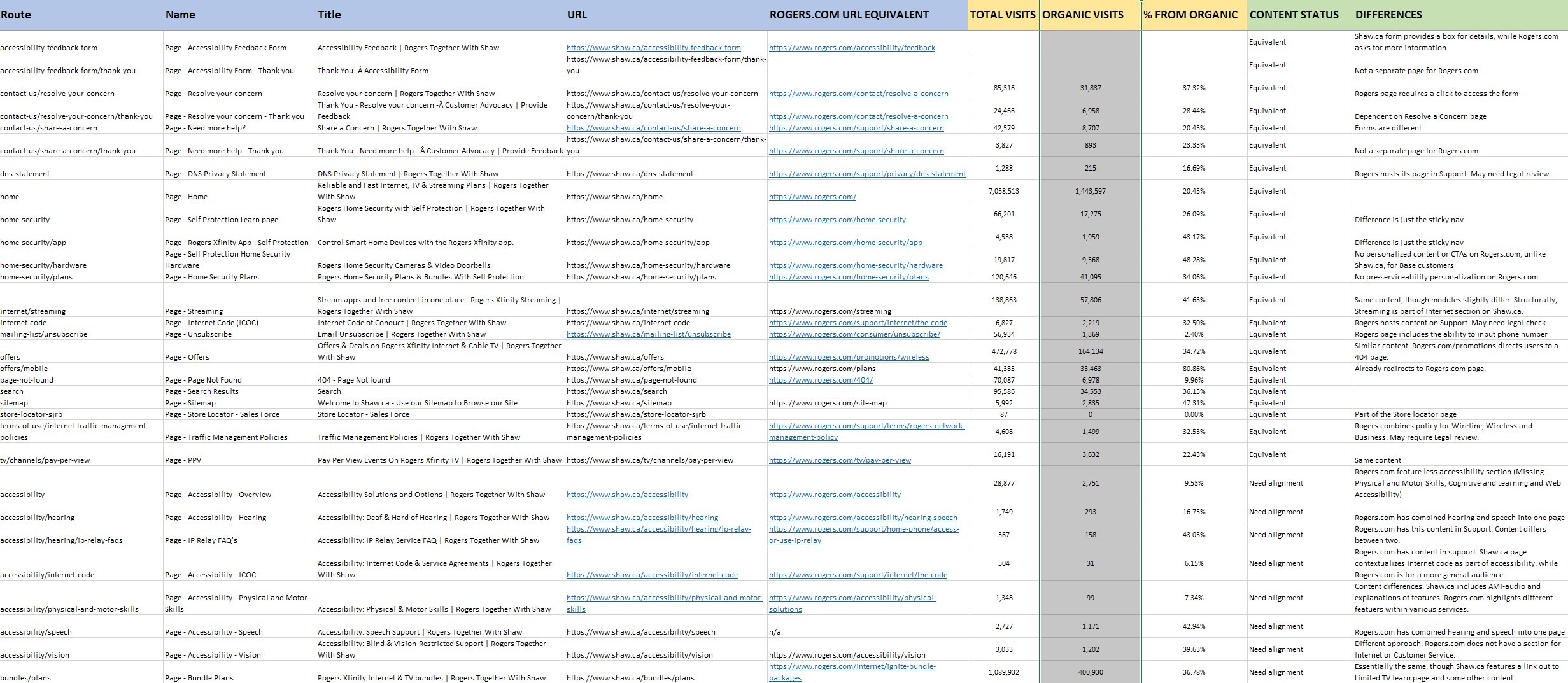
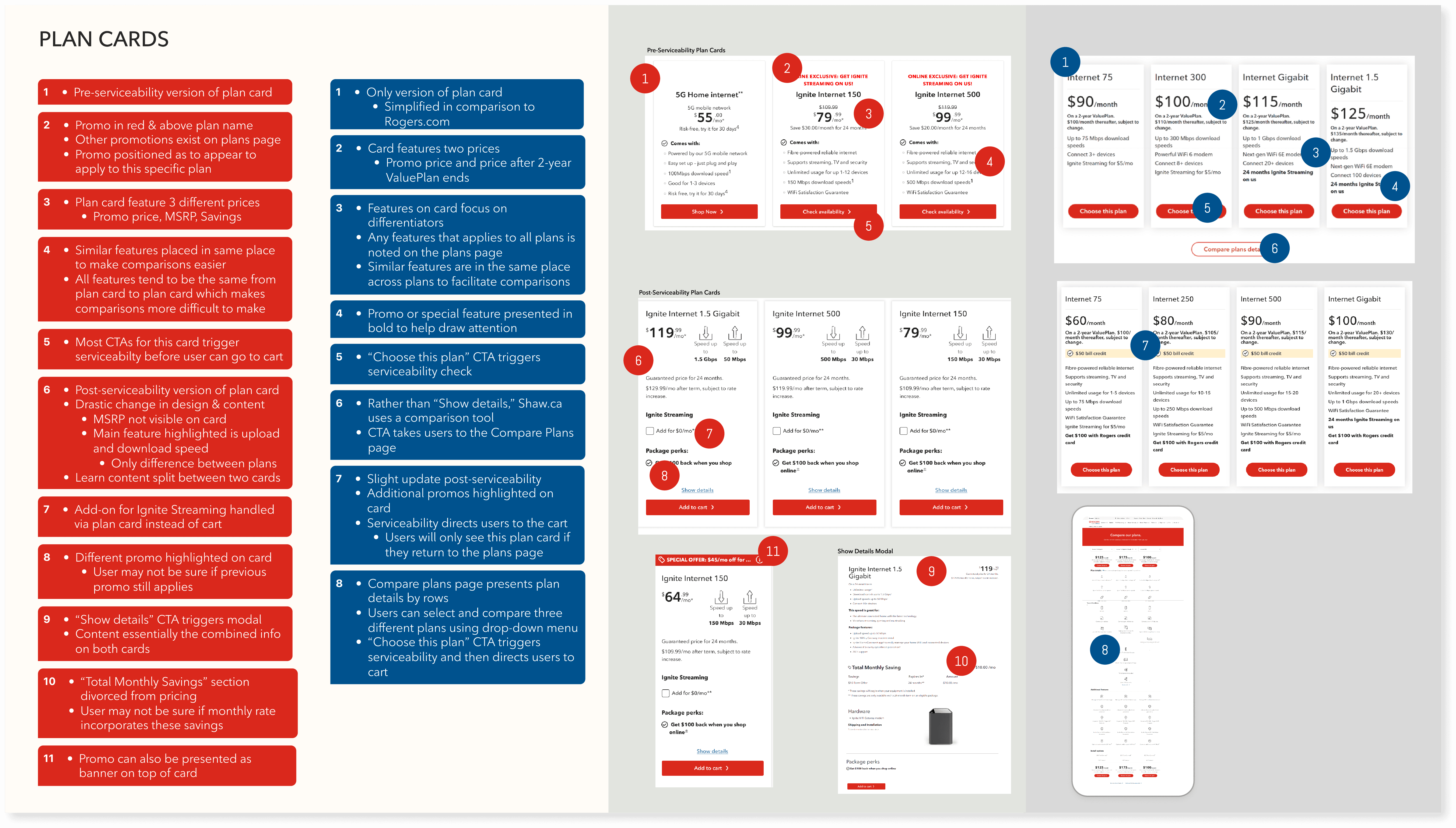
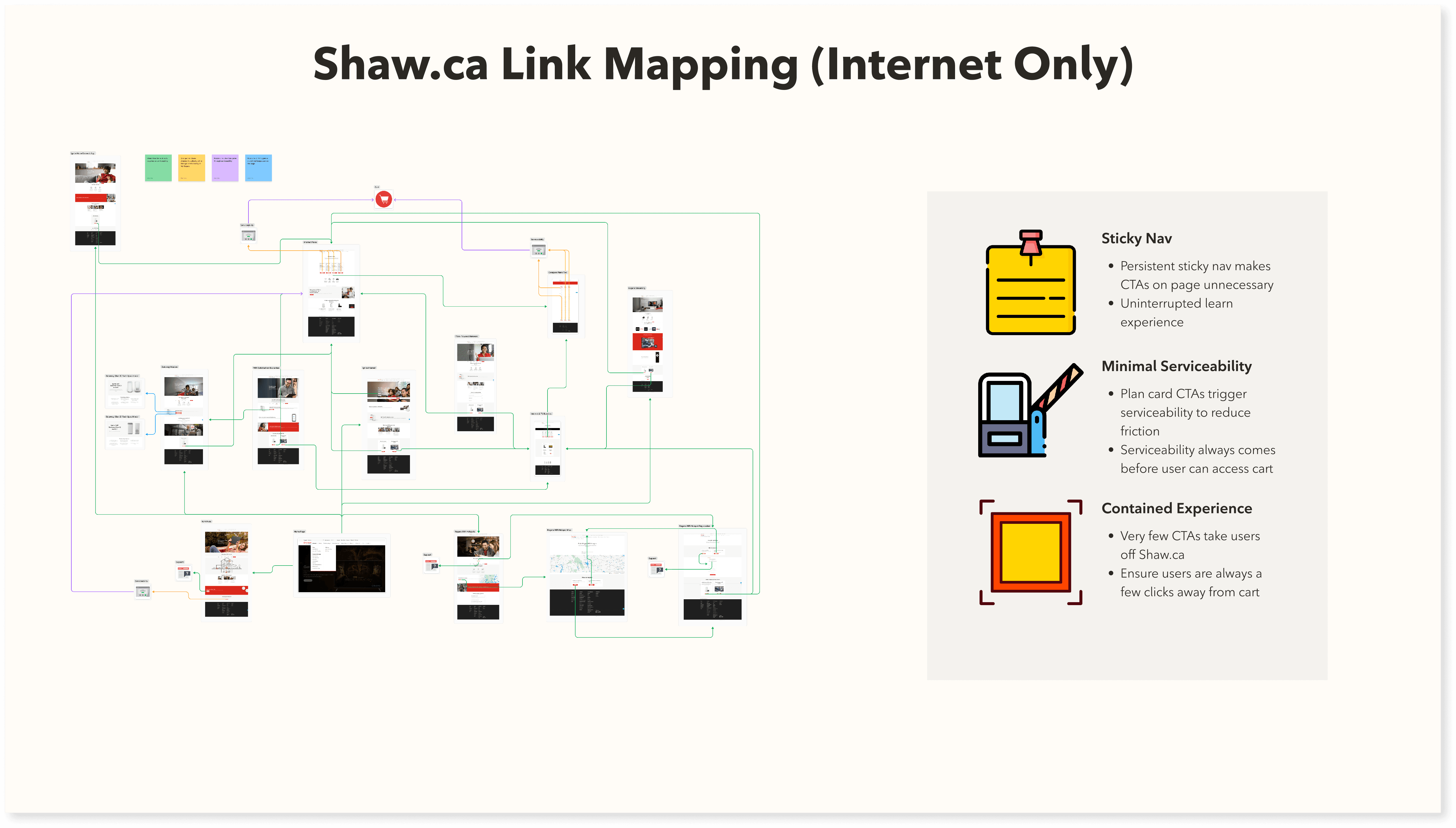
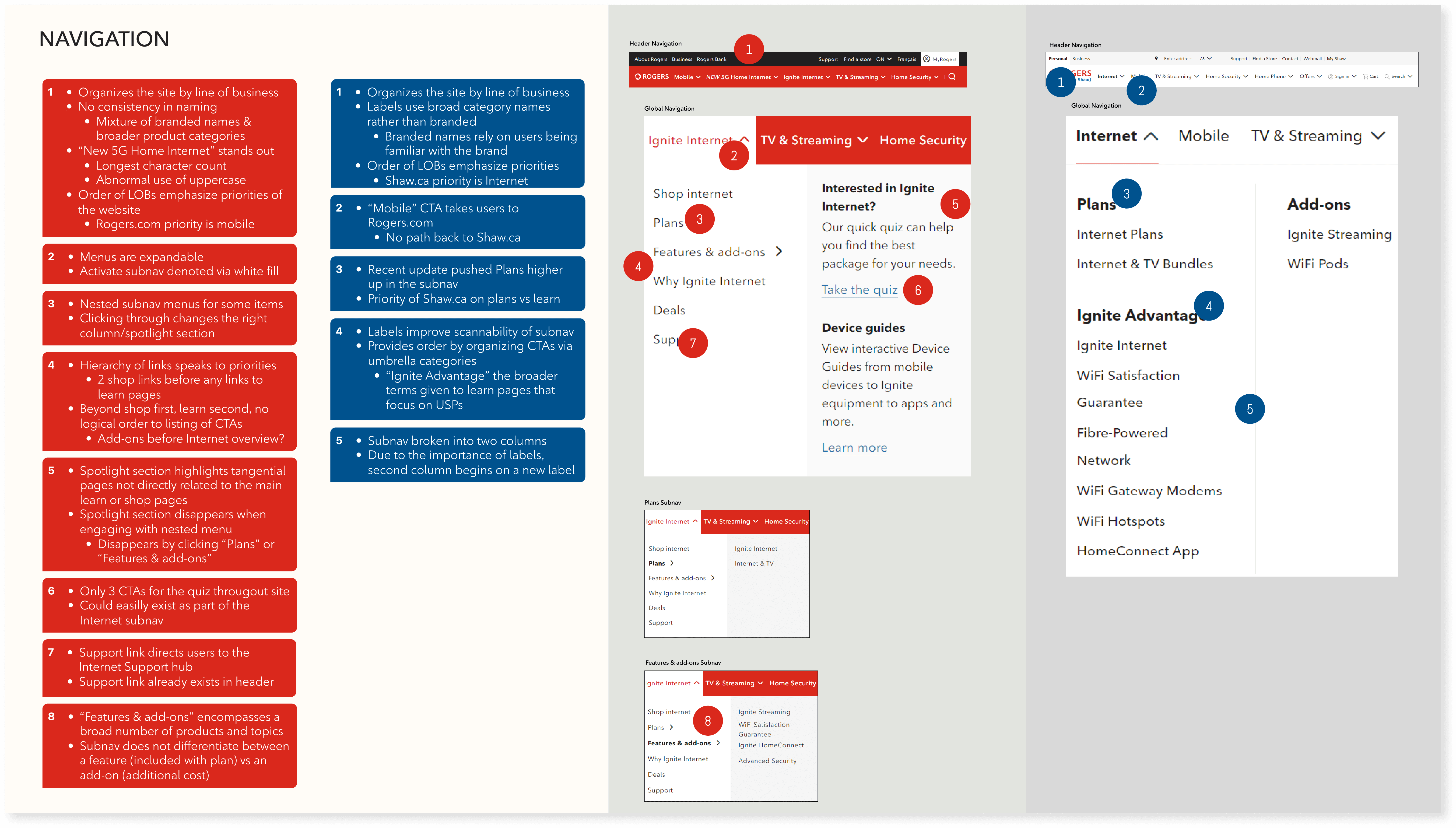
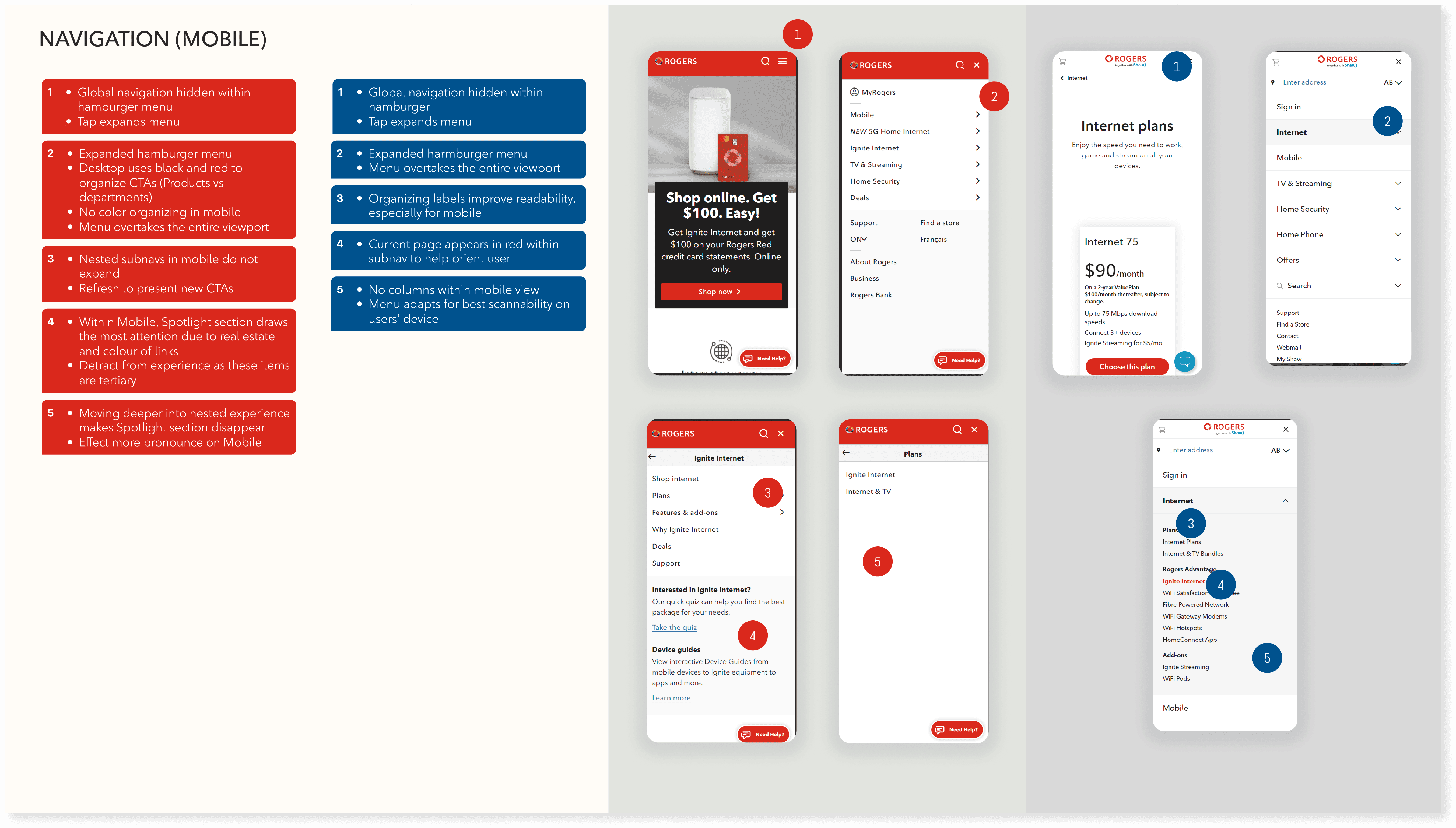
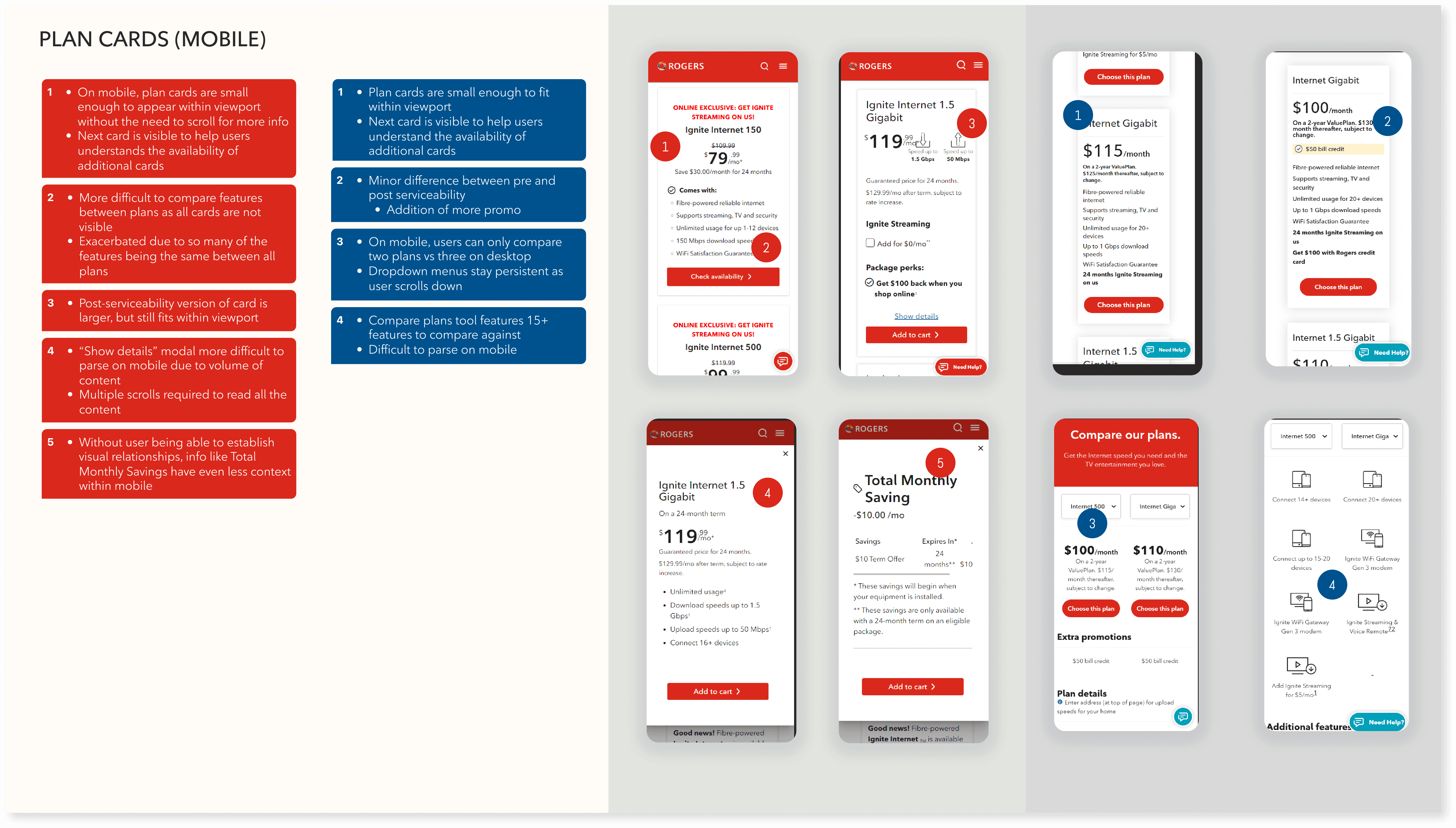
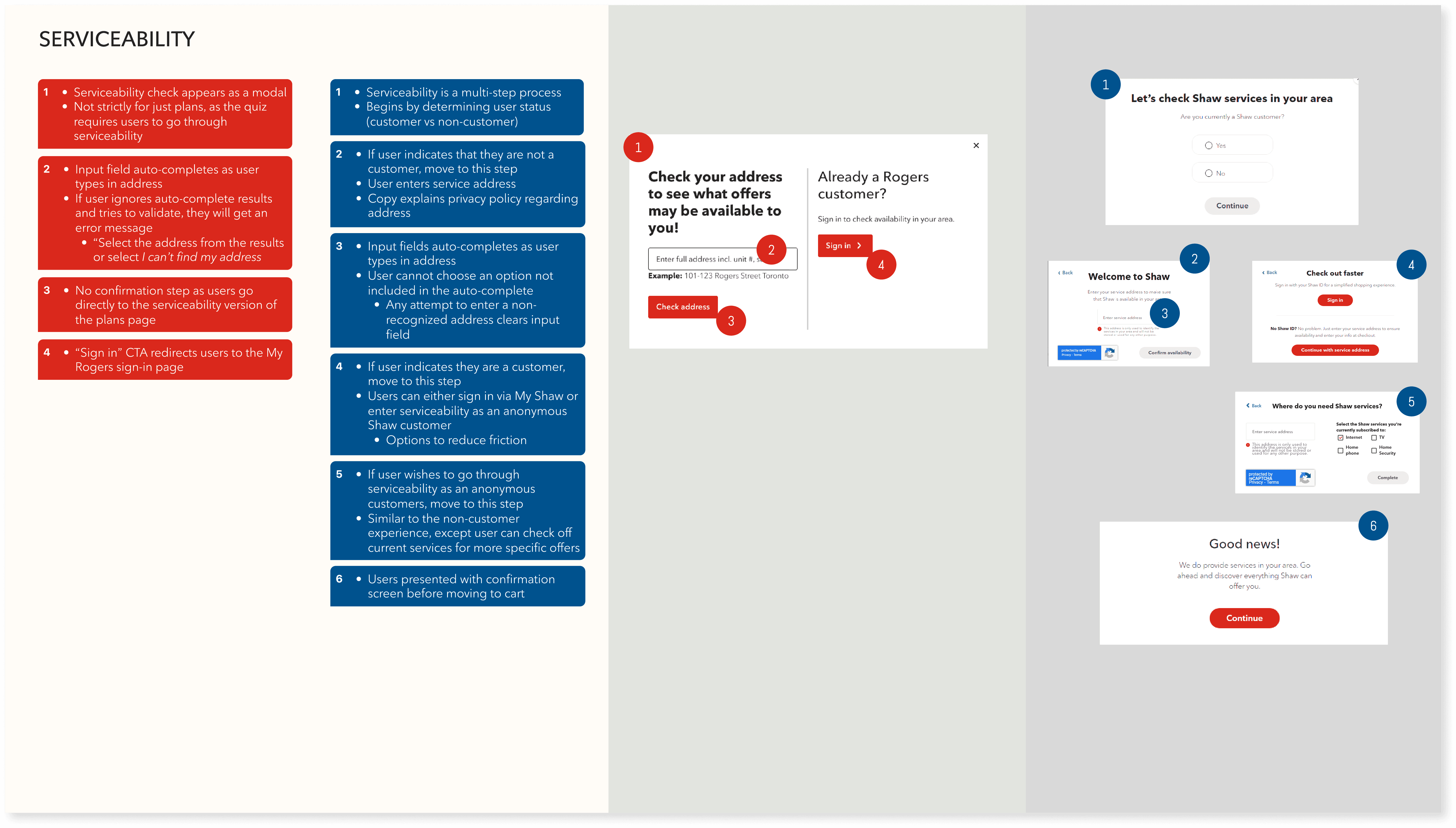
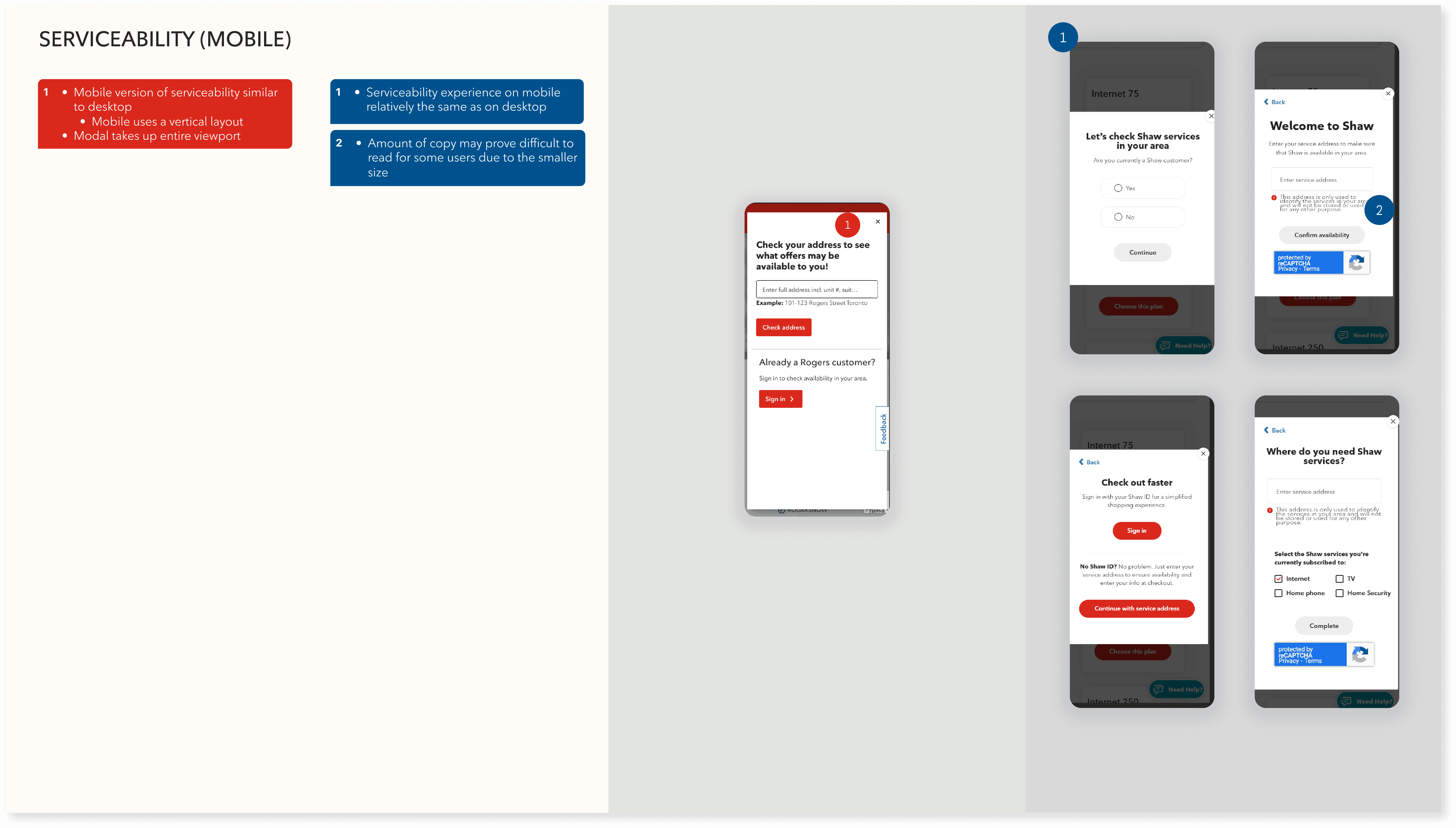
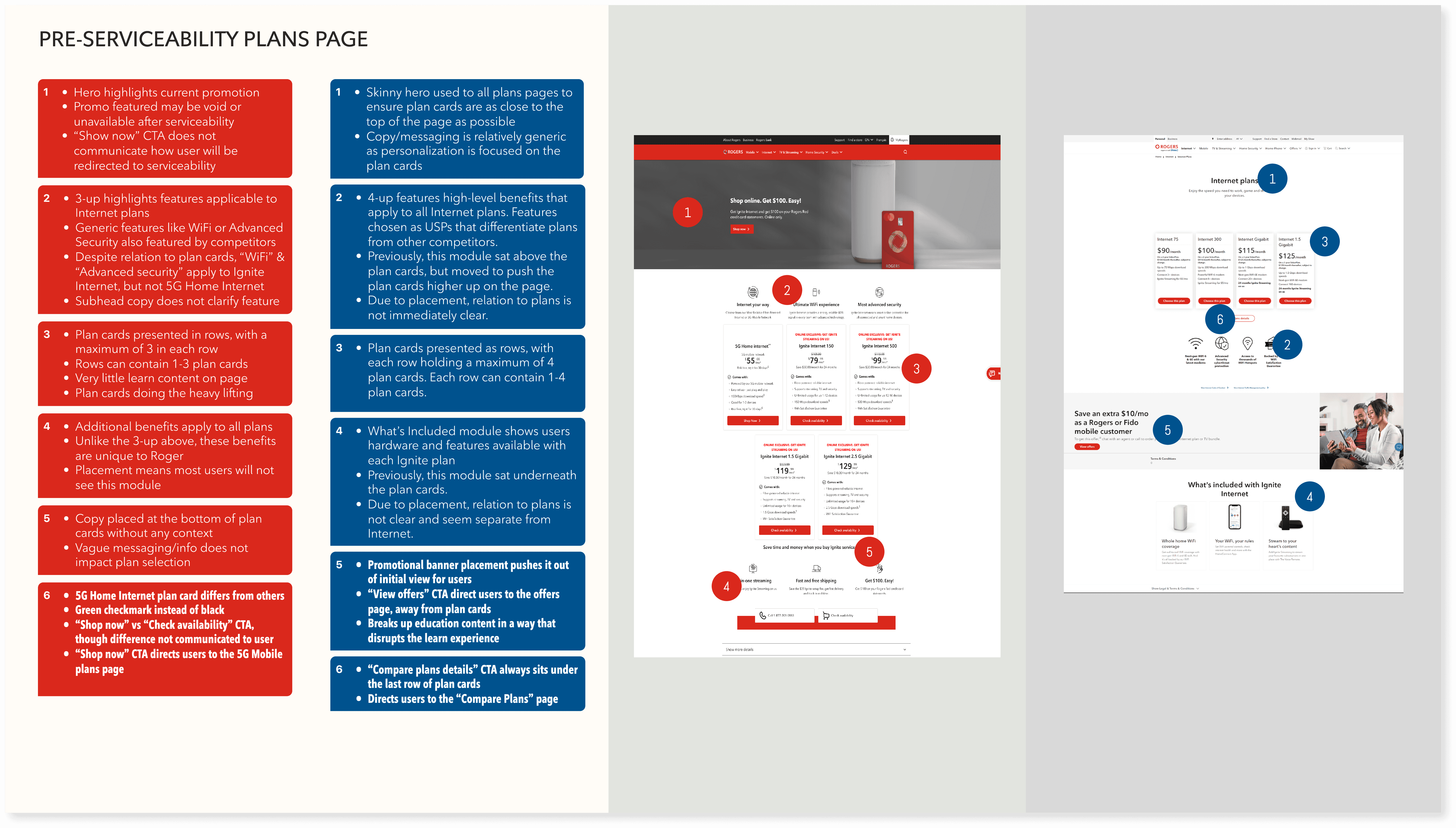
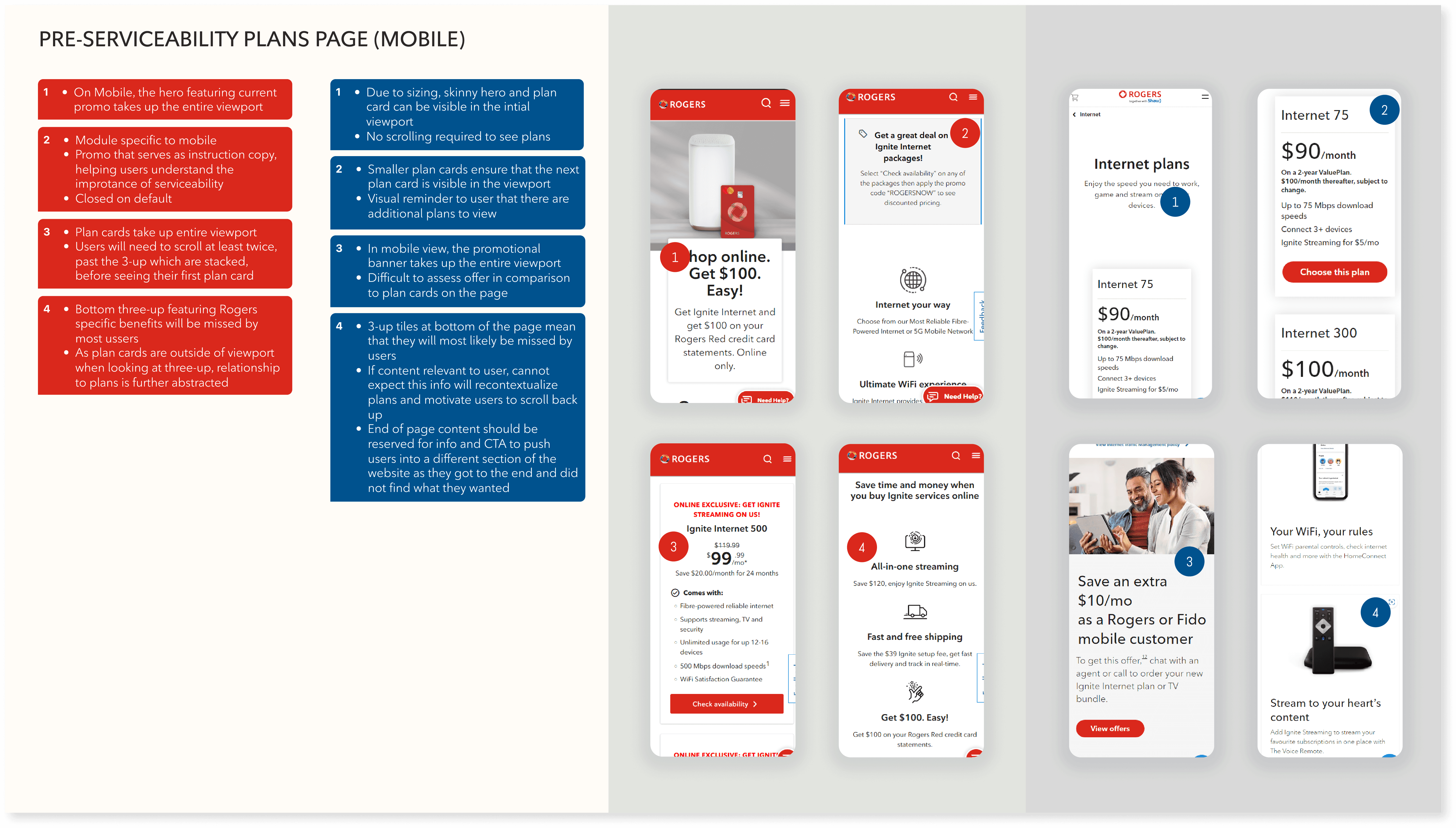
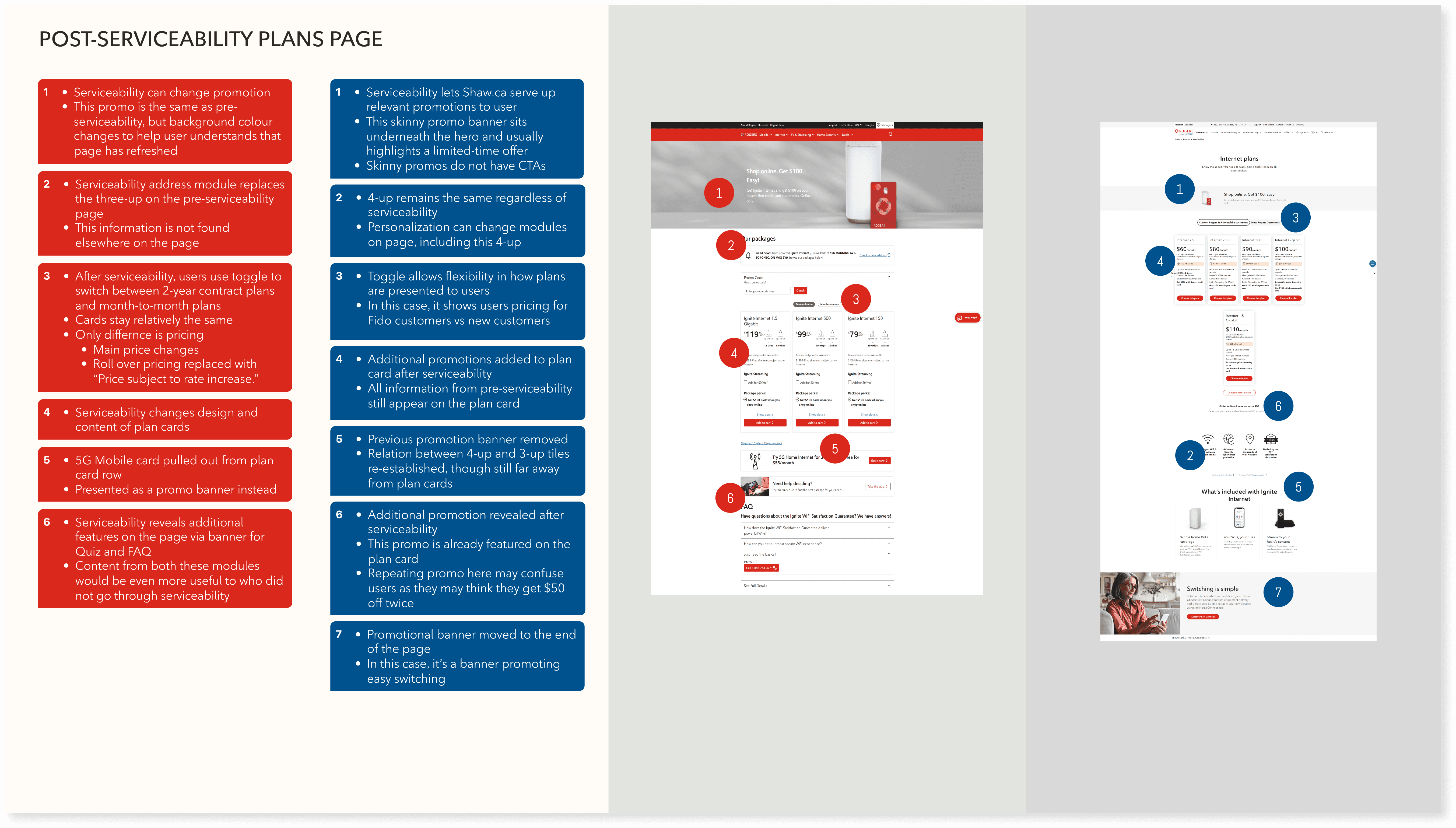
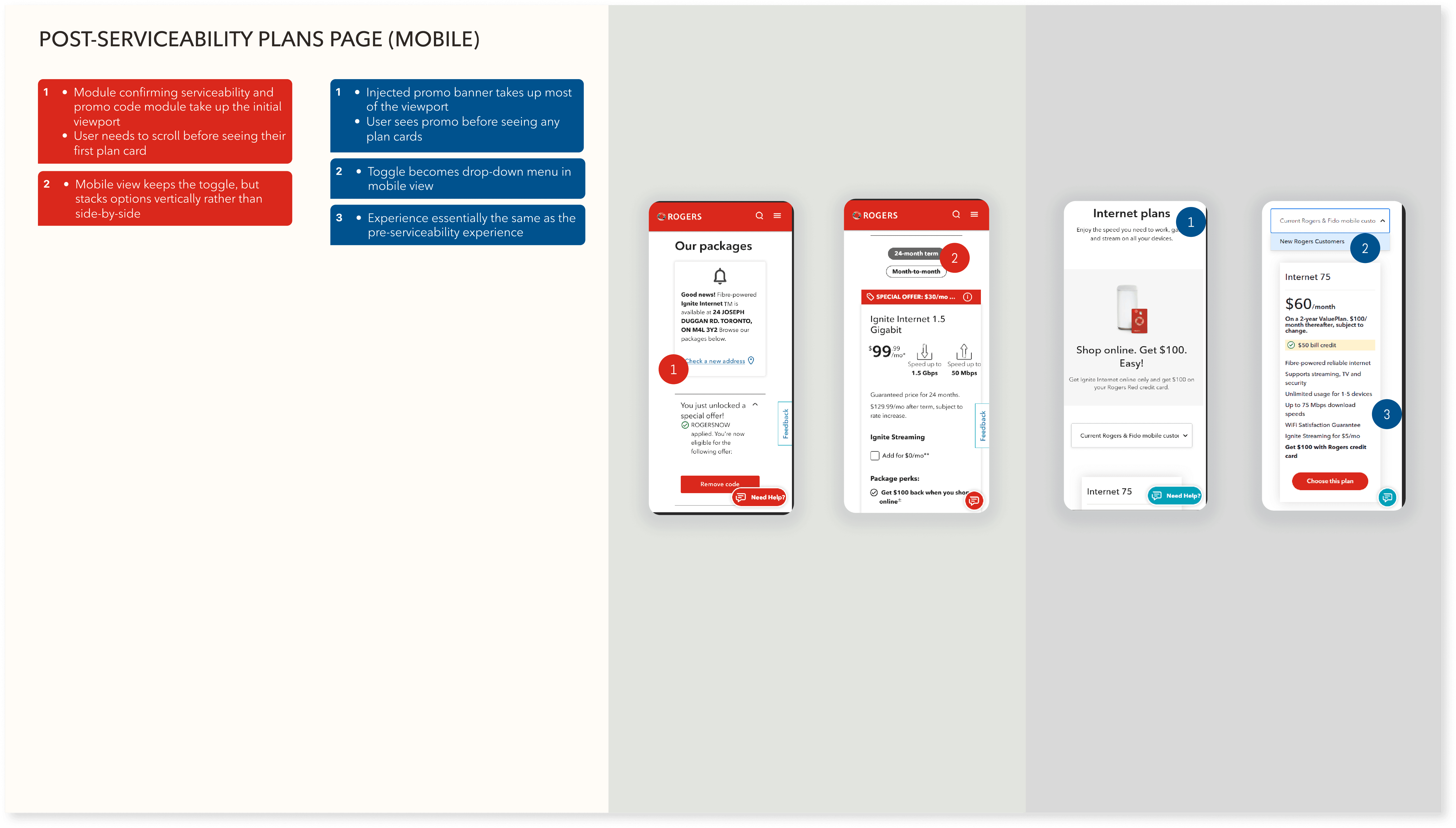
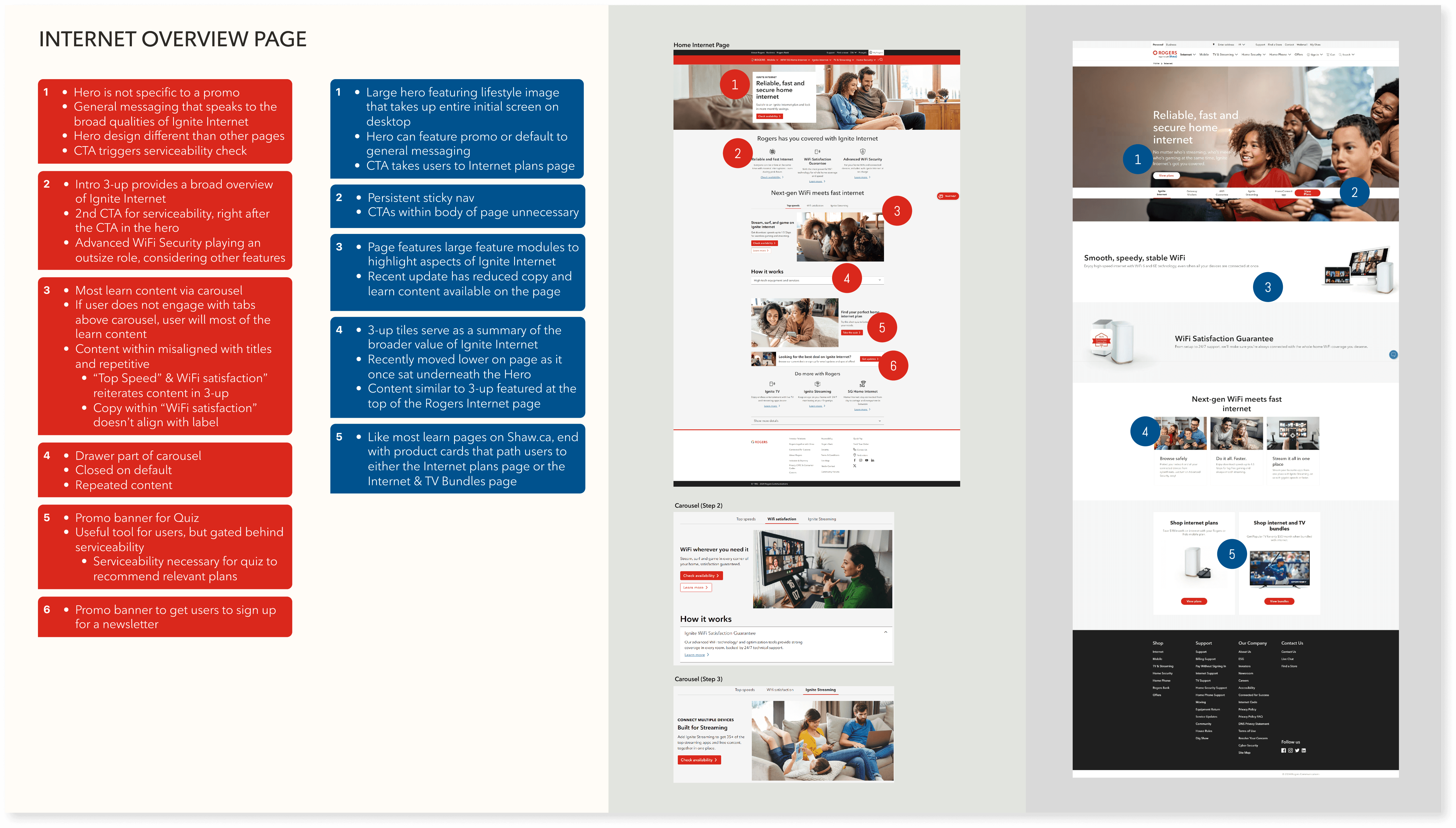
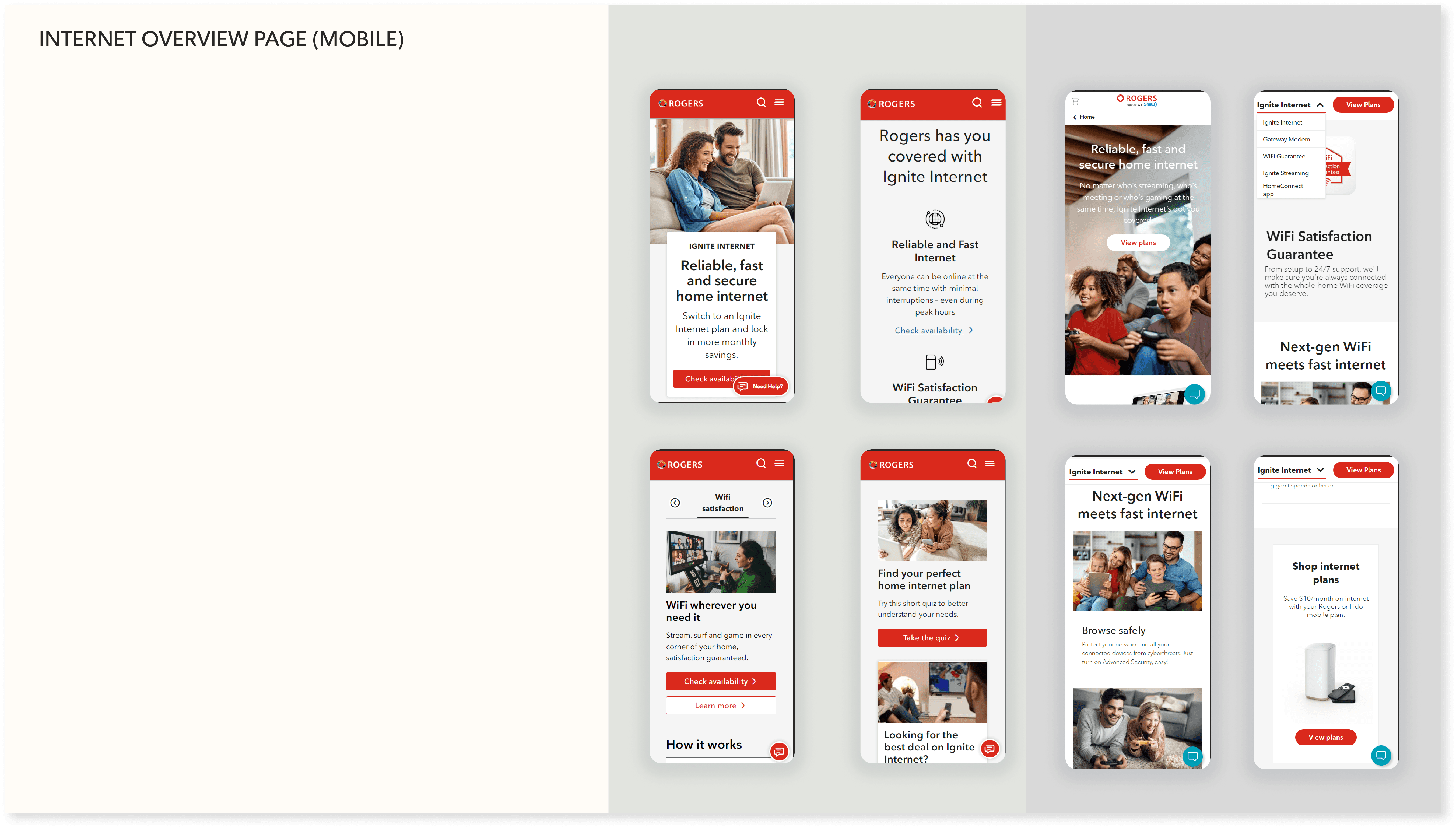
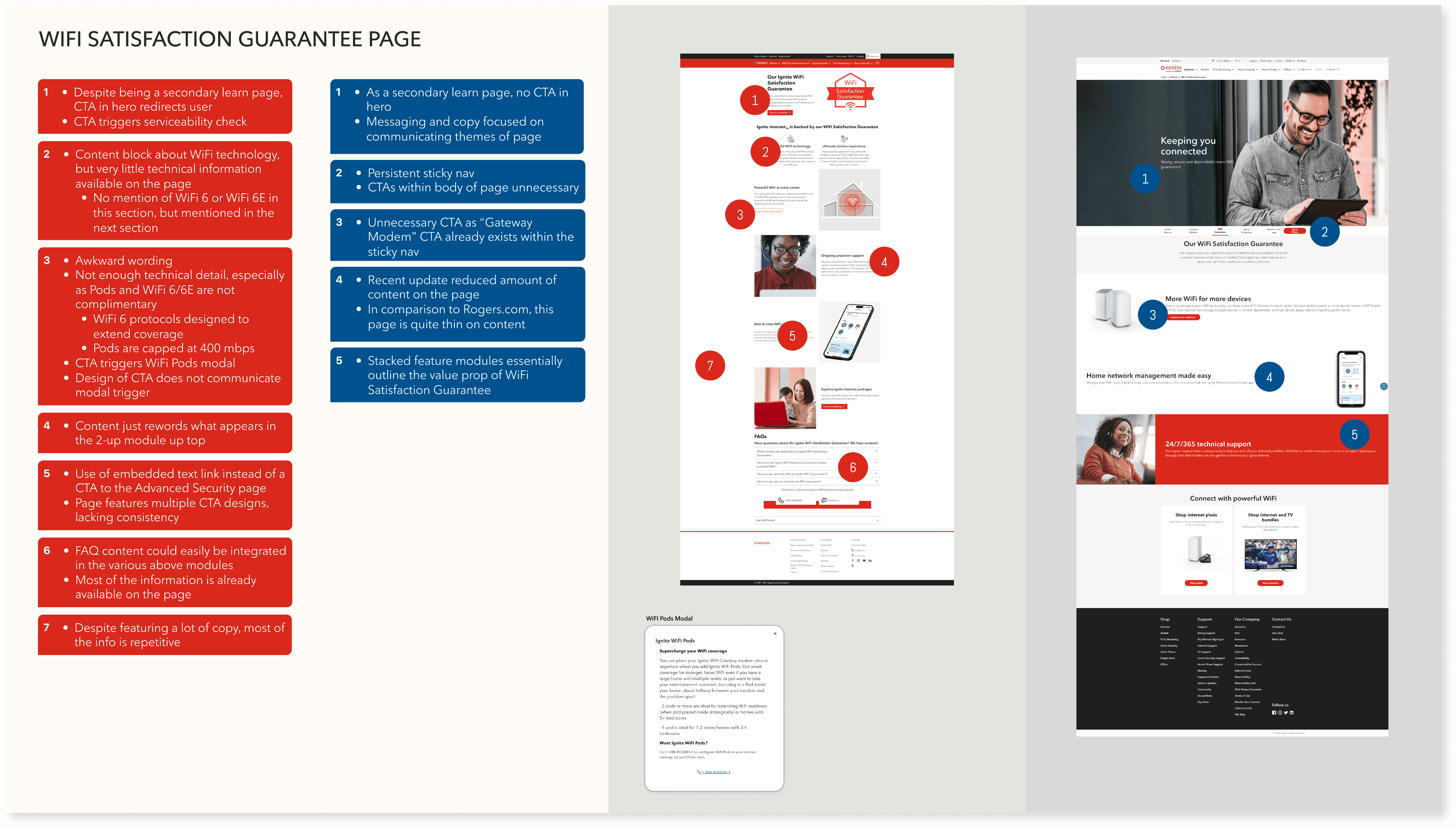
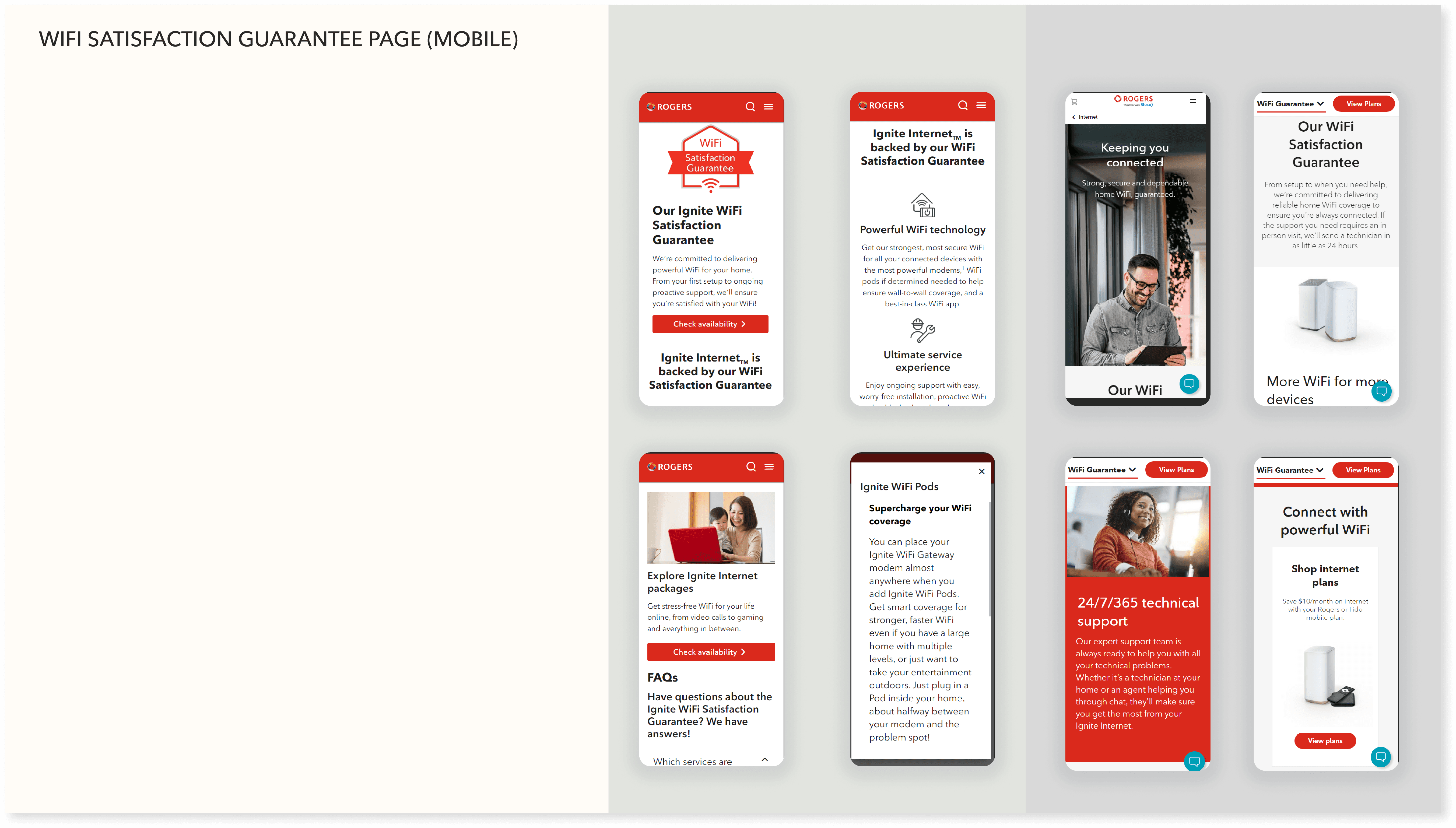
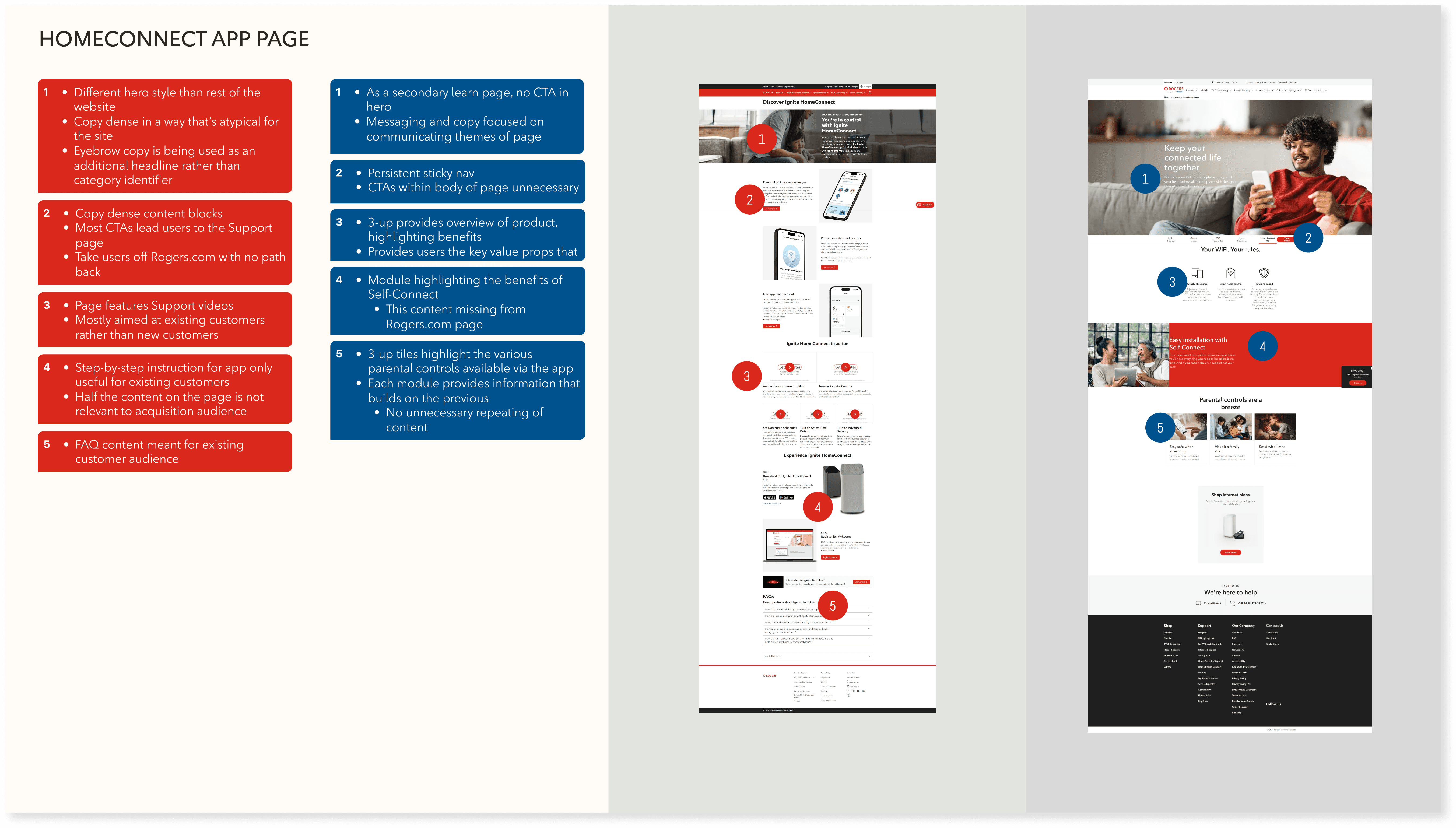
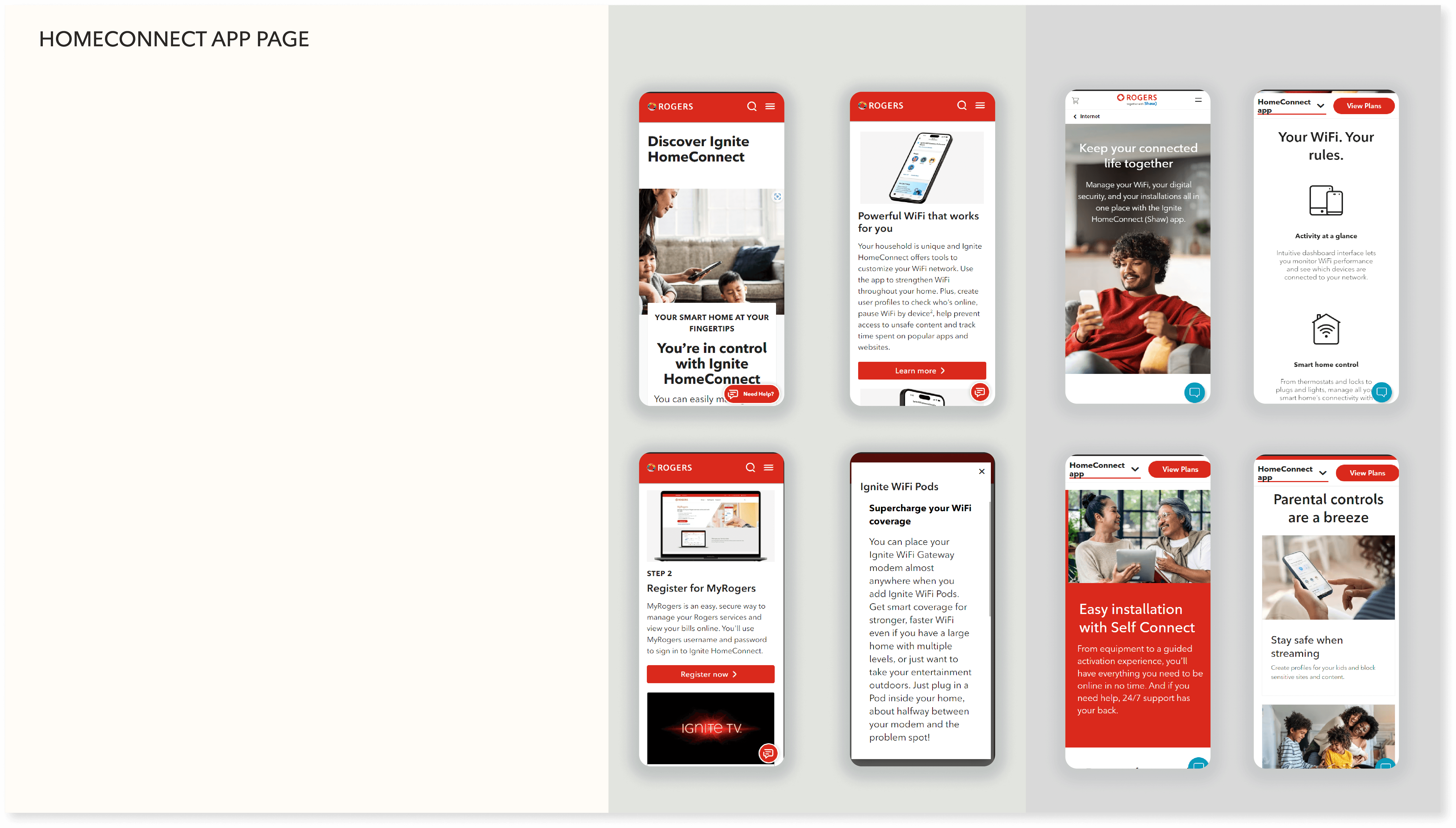
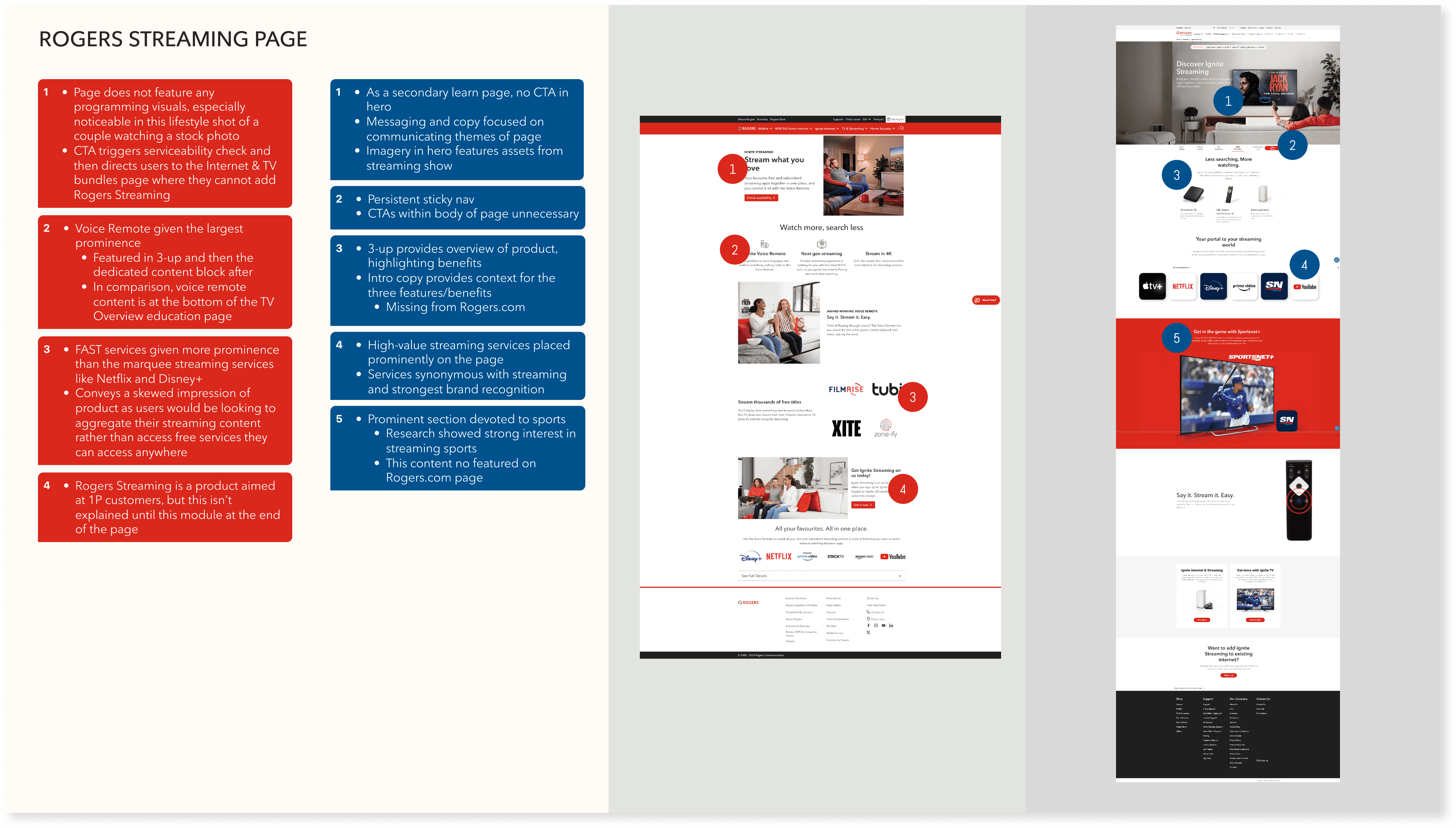
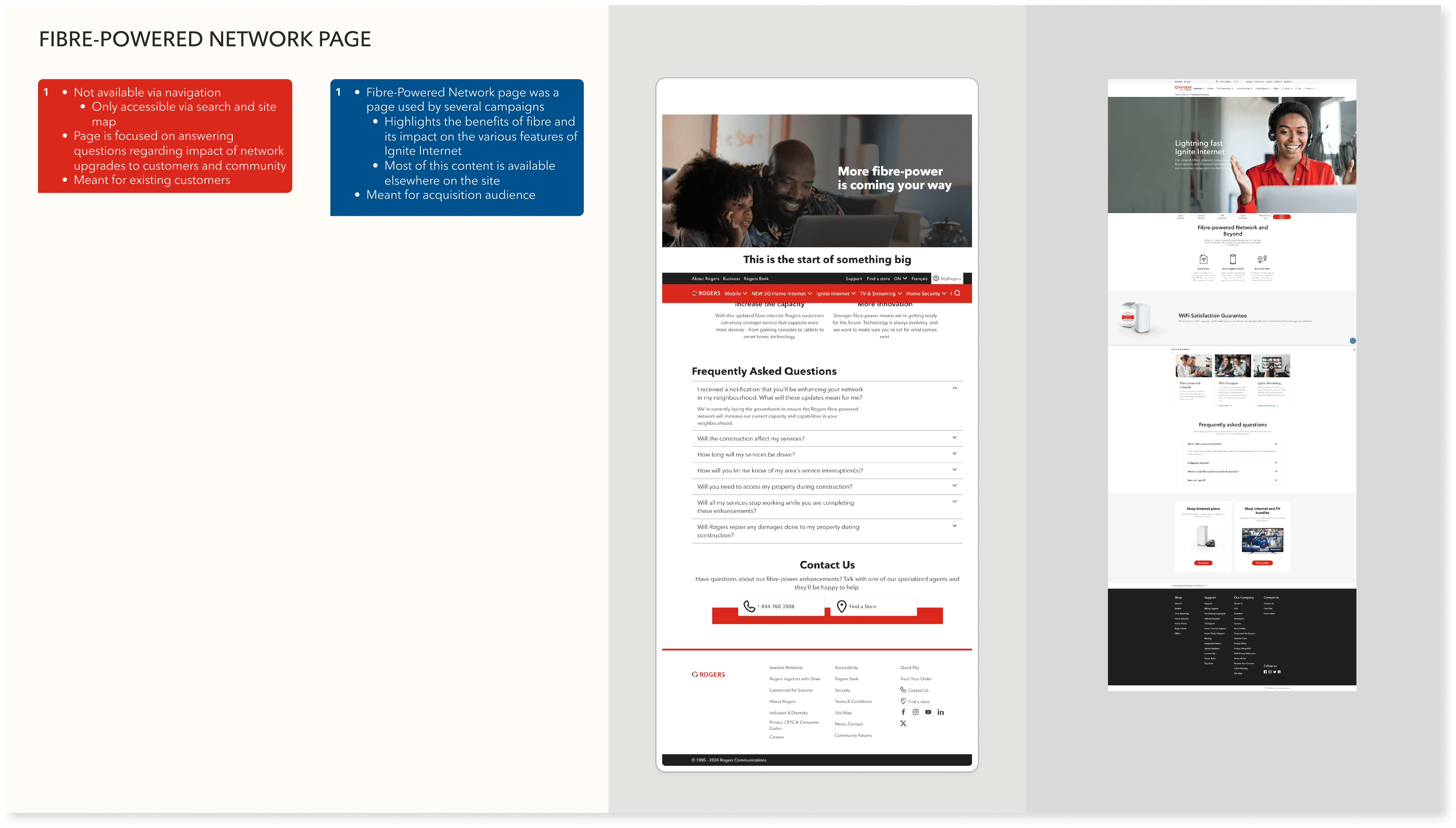
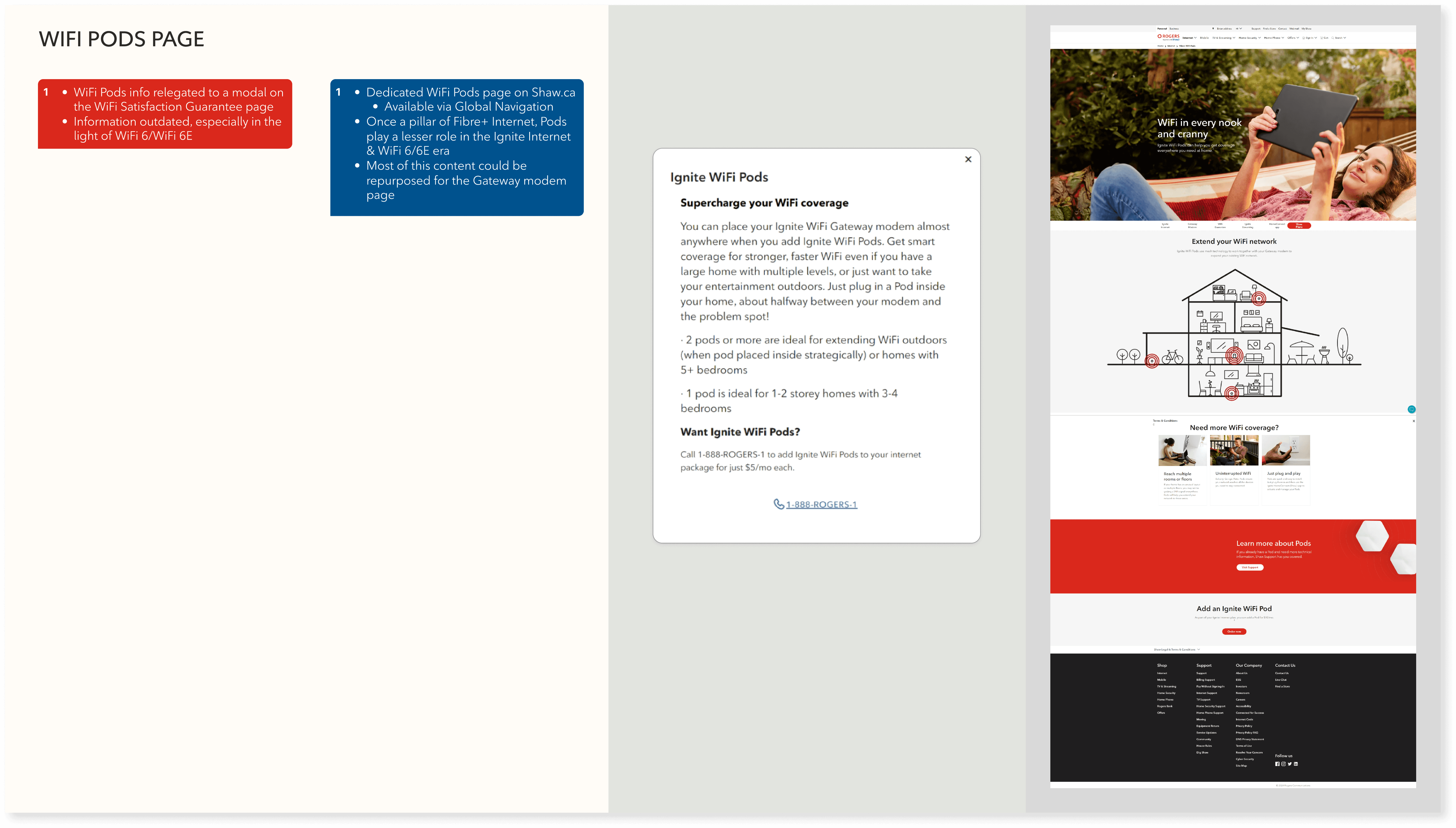
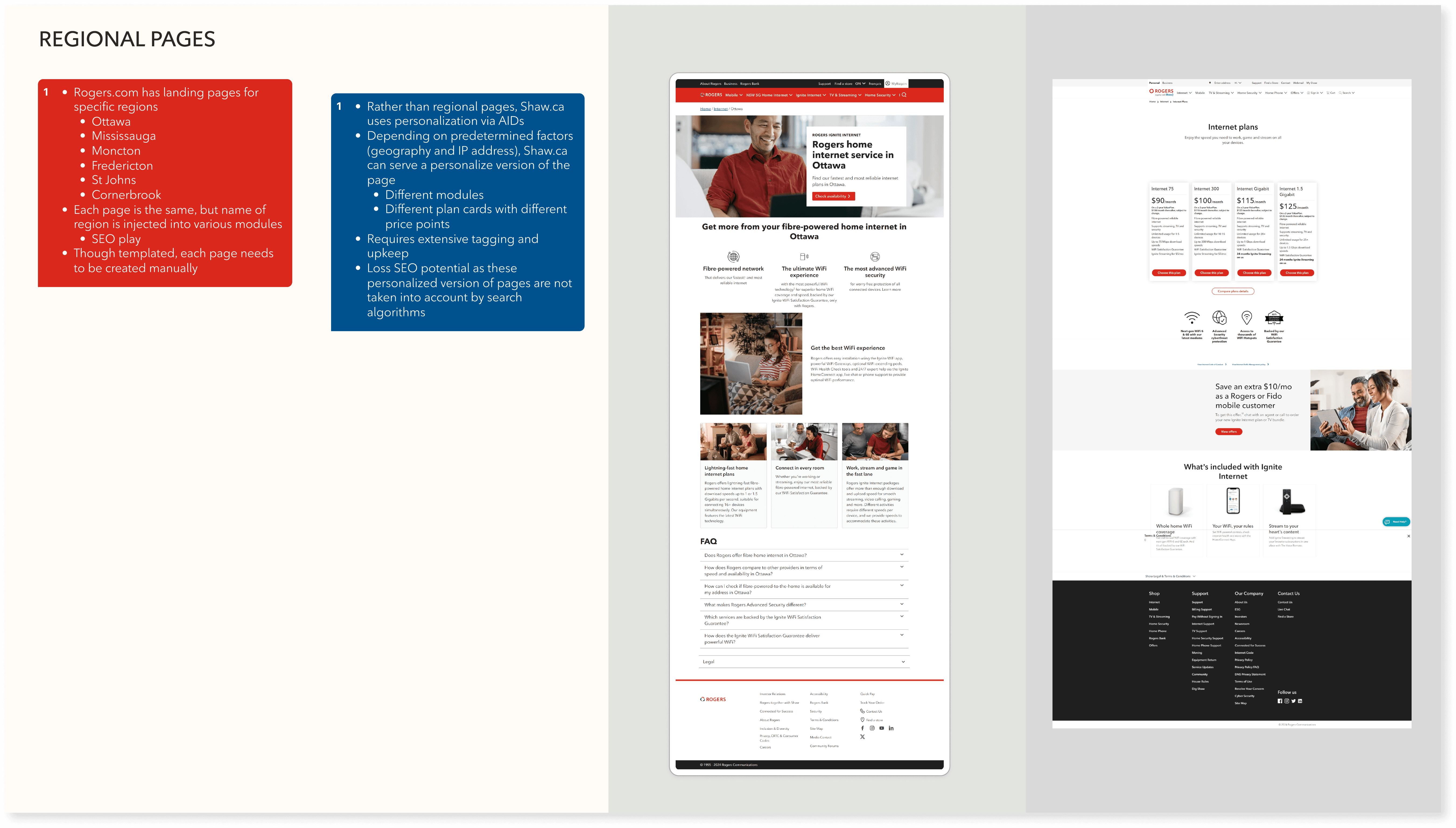
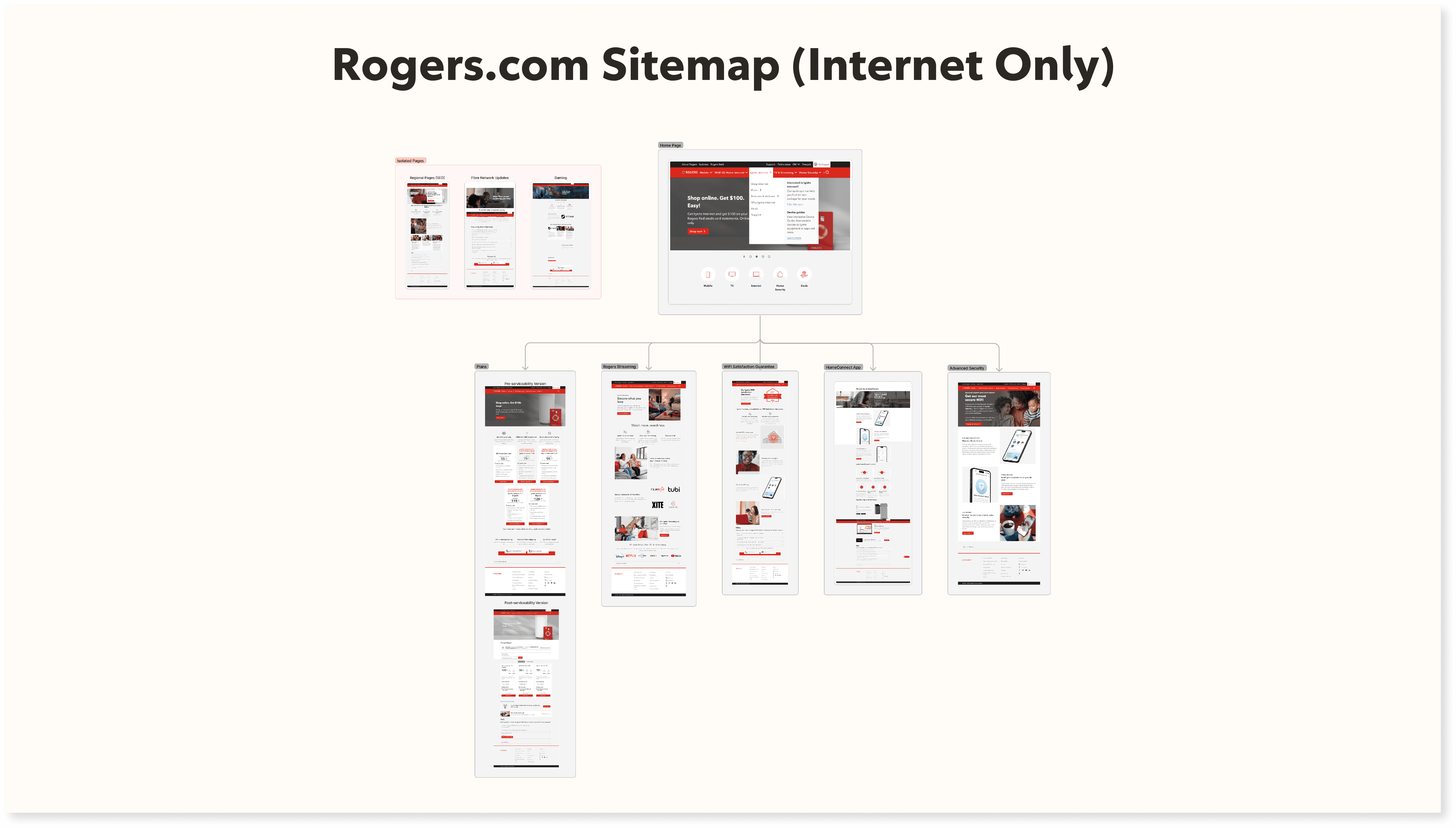
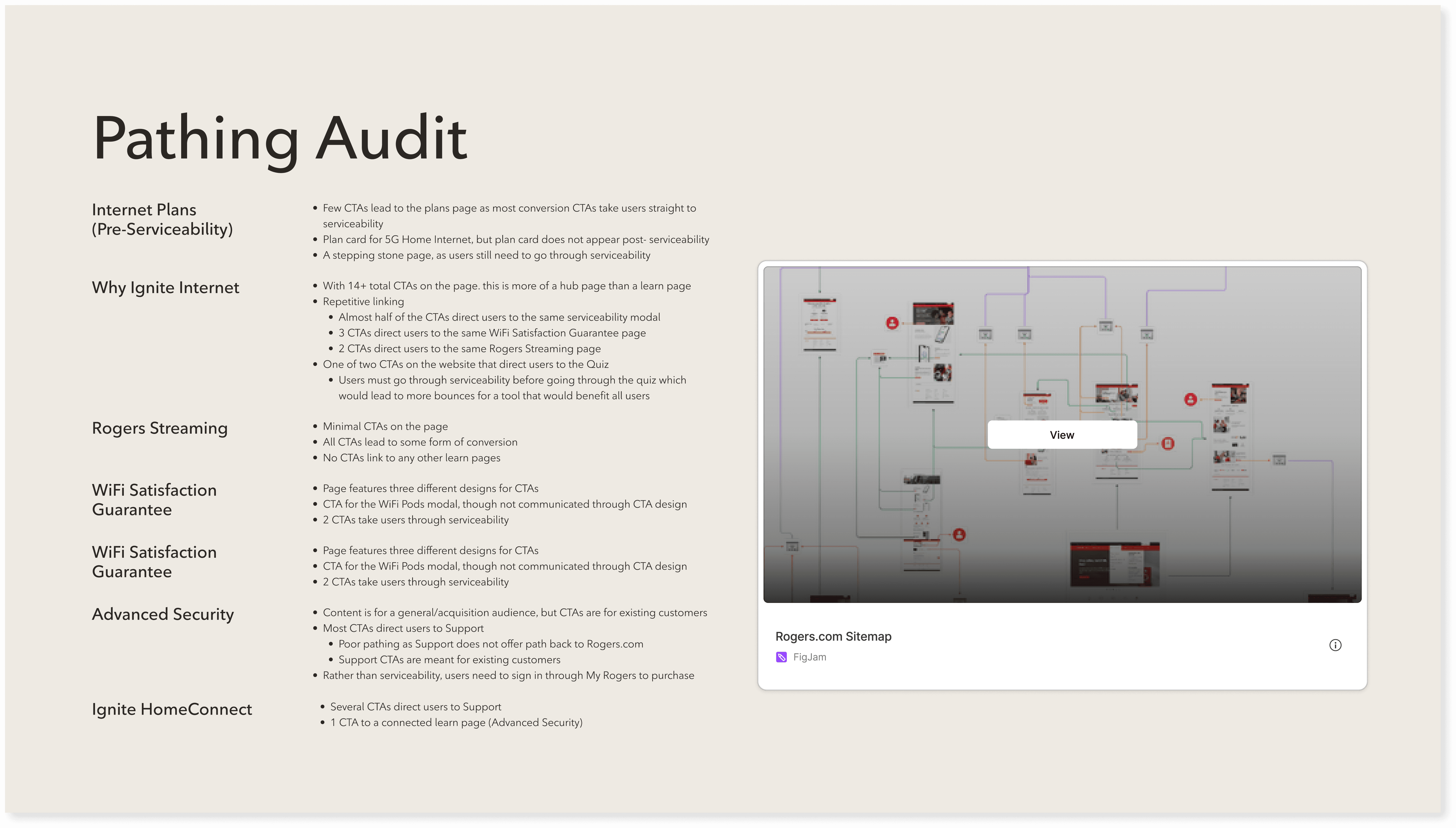
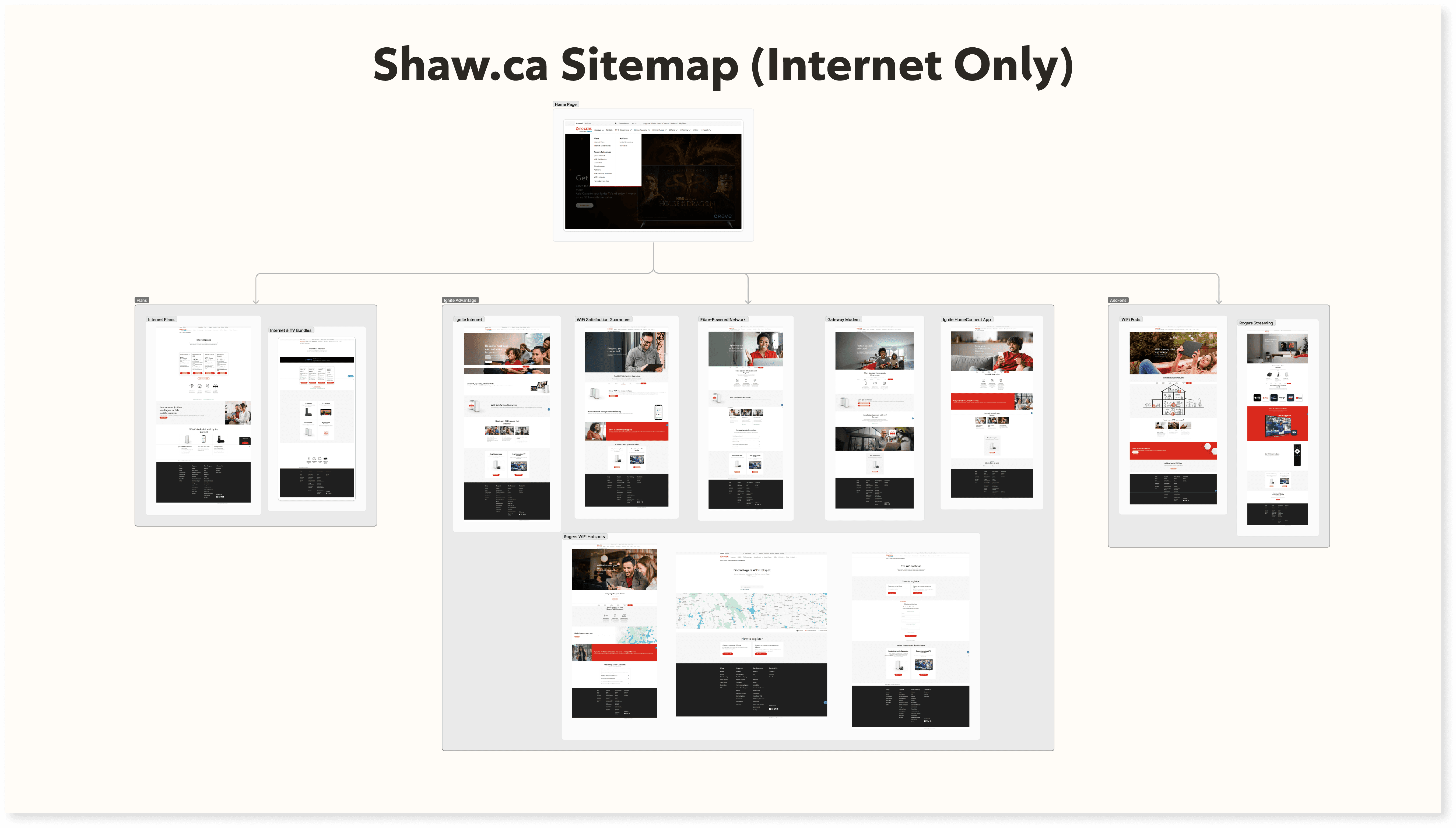
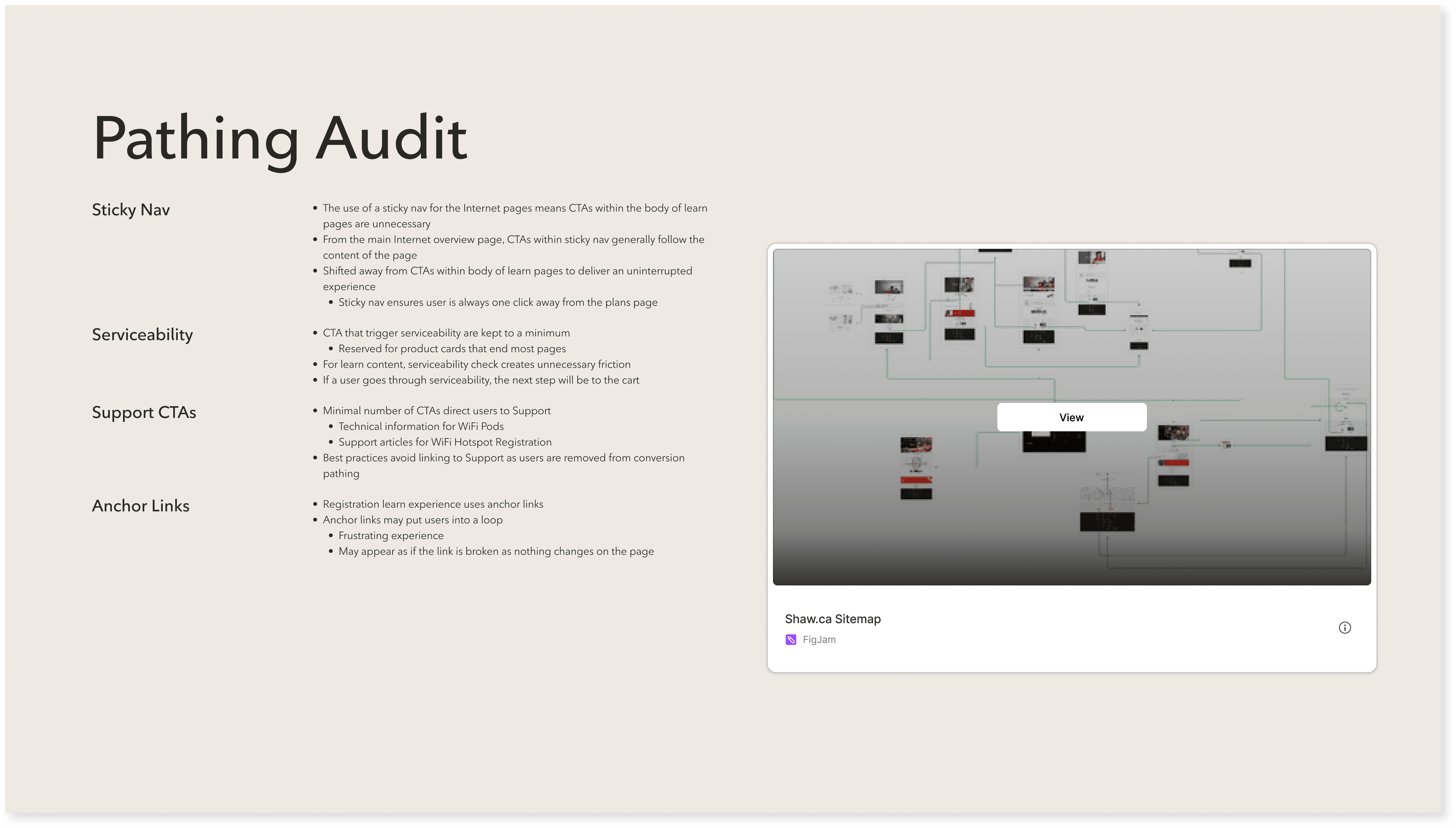
Though I was very familiar with both Shaw.ca and Rogers.com, I needed to conduct a comprehensive UX audit for each site so that the cross-functional team could understand the differences between experiences. These audits would assess navigation, information architecture, content, components and how CTAs connected to backend and account management systems.
This work produced:
Full-page inventory across 260+ pages on Shaw.ca
Cross-site component and pattern comparison
Mapping backend and account management systems dependencies
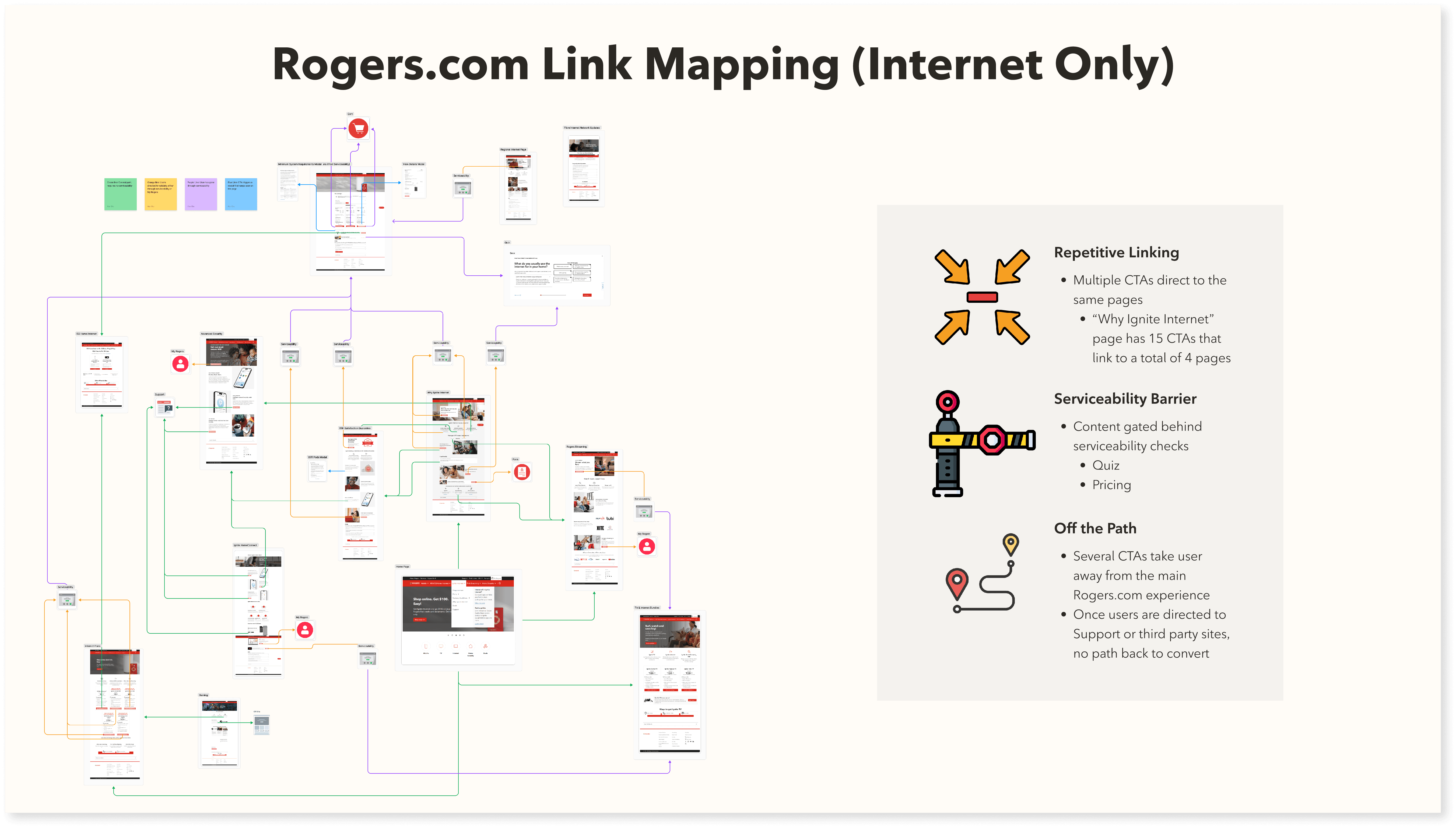
The expanded audits and maps are available in the Appendix.
Defining the UX Strategy Framework
The scope of this project necessitated the involvement of partners all across the organization, including Technology, Marketing, Branding, Legal, Product, SEO, UX Design and Content Design.
And with such an aggressive timeline, all teams needed to be on the same page and not pausing work to second-guess decisions. Based on all the work completed for the Experience Architecture and UX Audit, I created a UX Strategy Framework that helped stakeholders and cross-functional teams quickly onboard and understand the direction of the project. This lead to fewer misalignments, fewer rework cycles and faster decision-making.
Information Architecture & Navigation Strategy
After the audits and alignment from stakeholders, over 30 pages from Shaw.ca would be migrated to Rogers.com. Shaw.ca placed education content higher in the funnel to strengthen mid-funnel education and Browse pathways. These pages would be migrated to Rogers.com to expand the content footprint of the site. Other pages were identified as remaining on Shaw.ca due to their connection to backend or account management Systems. The majority of pages would be decommissioned for either being irrelevant or a duplicat already existed on Rogers.com.
As part of this work, I redesigned the Information Architecture to ensure those 30+ pages seamlessly integrated into the existing architecture. Not only were the pages integrated, but all Content was reviewed to ensure the pages worked within the content ecosystem of Rogers.com.
Working closely with the UX Design and Content Design team, we created a unified global navigation that would work for both domains. The utility navigation would need to be region-specific due to their connection to their specific account management system. As part of this work, I mapped and tested log-in and account management routes to ensure users were routed to the correct experience.
Roadmap, Governance & Delivery
I created a centralized documentation repository to act as a single source of truth for the cross-functional working groups. The repository included UX audits, page inventories, purchase flow maps, system and dependency maps and strategic decision records. All these were annotated and contextualized to ensure non-UX stakeholders like Legal could quickly understand what was happening without needing to translate UX artifacts.
Specifically for the UX Design and Content team, I created a migration roadmap to help clarify priorities and ownership of the updates and new pages required for the unified digital experience.
Appendix
01

02
03
04
05
06
07
08
09
010
011
012
013
014
015
016
017
018
019
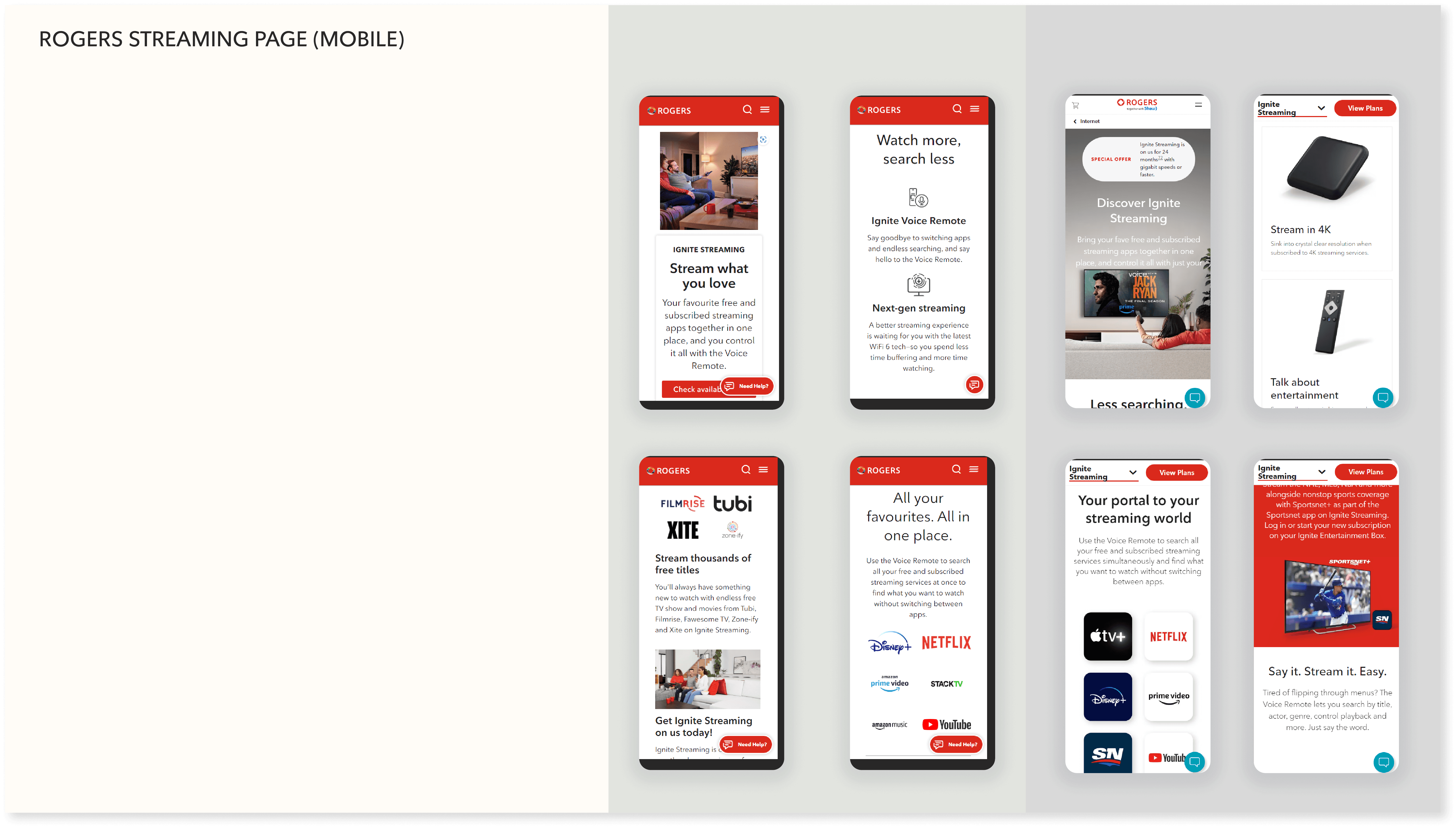
020
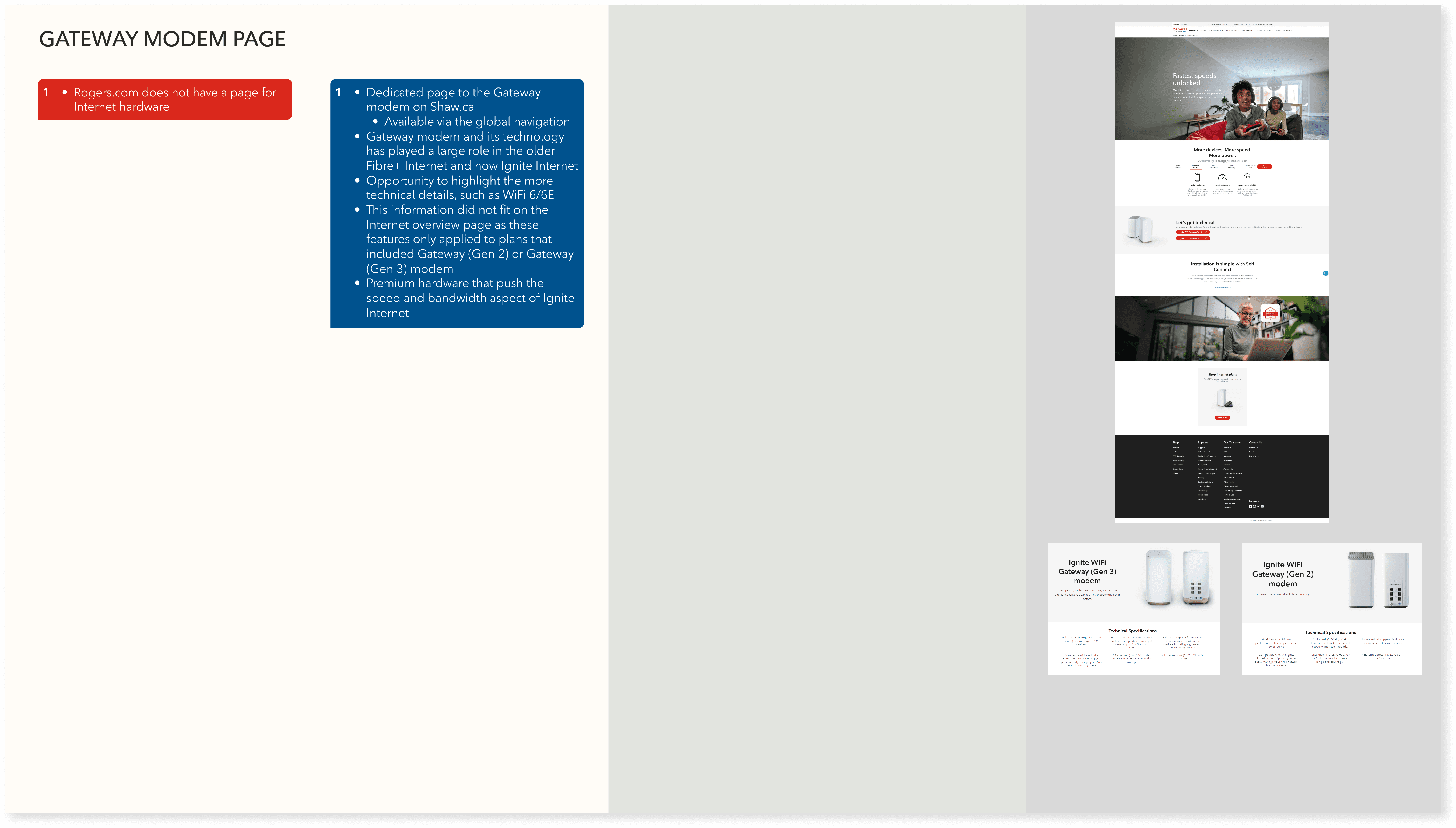
021
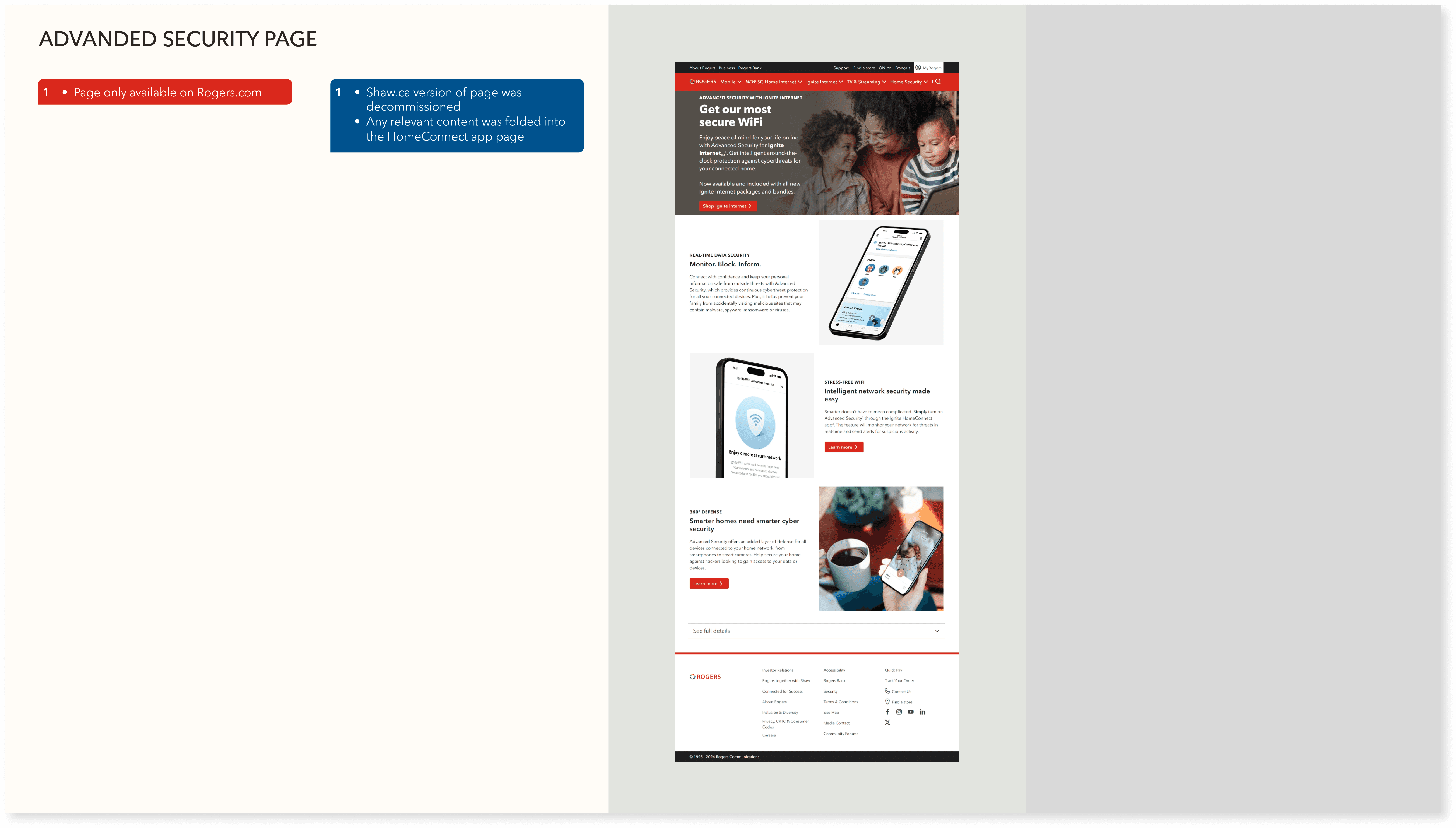
022
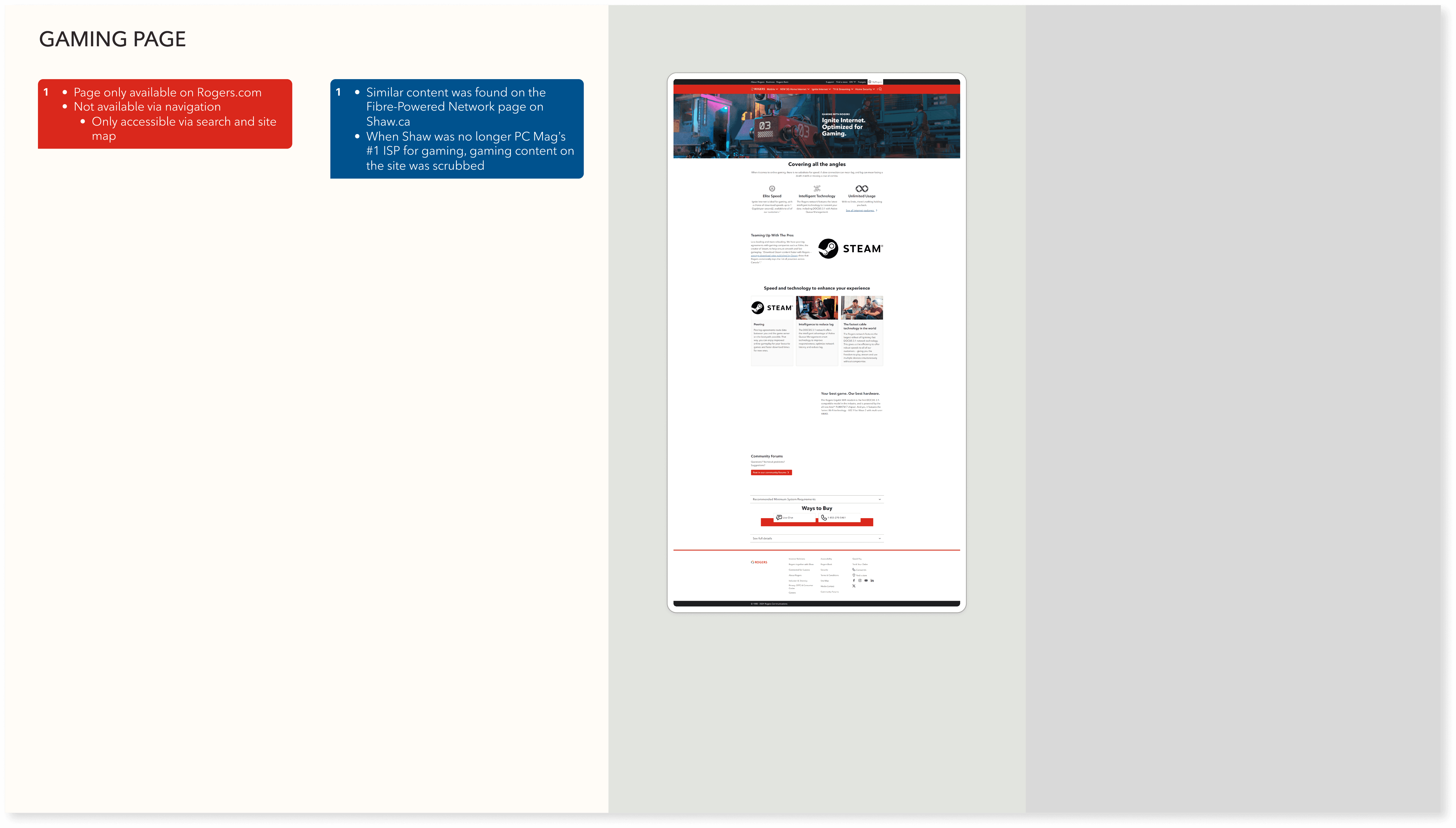
023
024
025
01

02
03
04
05

06
07
08
see also