Building a Bundle Builder
A case study on overcoming technical constraints and stakeholder hesitation to bring customized bundles to Rogers.com.
00

Problem
According to the Canadian Competition Bureau, over 65% of Canadians bundle their internet with another service, and 2 in 5 Canadians bundled three or more services together. For telecoms, bundles help increase customer stickiness and reduce churn. It’s a win-win. However, that’s not the way Rogers.com worked. Rogers relied on pre-defined bundles with very little customization. In the last few years, Rogers had rapidly expanded its product catalogue to include streaming and smart home security. With every new product and add-on, there were more opportunities for customisation that Rogers.com was not taking advantage of. As the UX Strategist, I led the initiative to develop a dynamic bundle builder experience.

Understanding how backend systems work allows for smarter UX solutions that don’t require major new technology.
Strategic Solutions to Technical Constraints

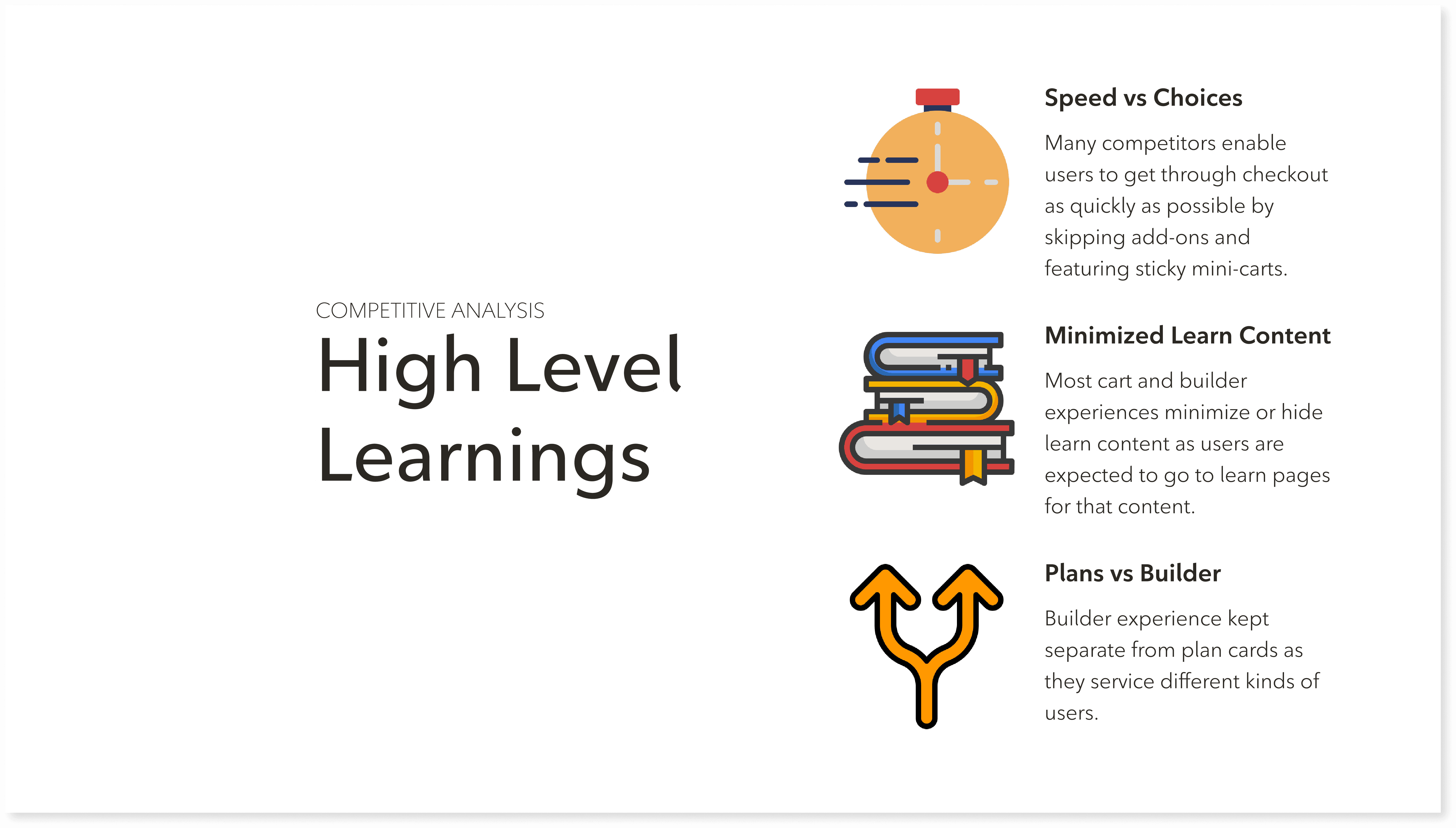
Competitive research helped stakeholders understand the need for a bundle builder by demonstrating the gap between Rogers and its competitors.
Alignment via Research

Tools like Figma Make help accelerate the iteration process by incorporating feedback from stakeholders who can engage with a tangible UX artifact
Generative AI Prototyping
Challenges
Rogers.com backend was not built for flexibility. New products and add-ons could not be easily integrated into the existing purchase flows.
KEY CHALLENGE | IMPACT | STRATEGIC DECISION |
|---|---|---|
|
|
|
|
|
|
|
|
|
Competitive Analysis & Audit
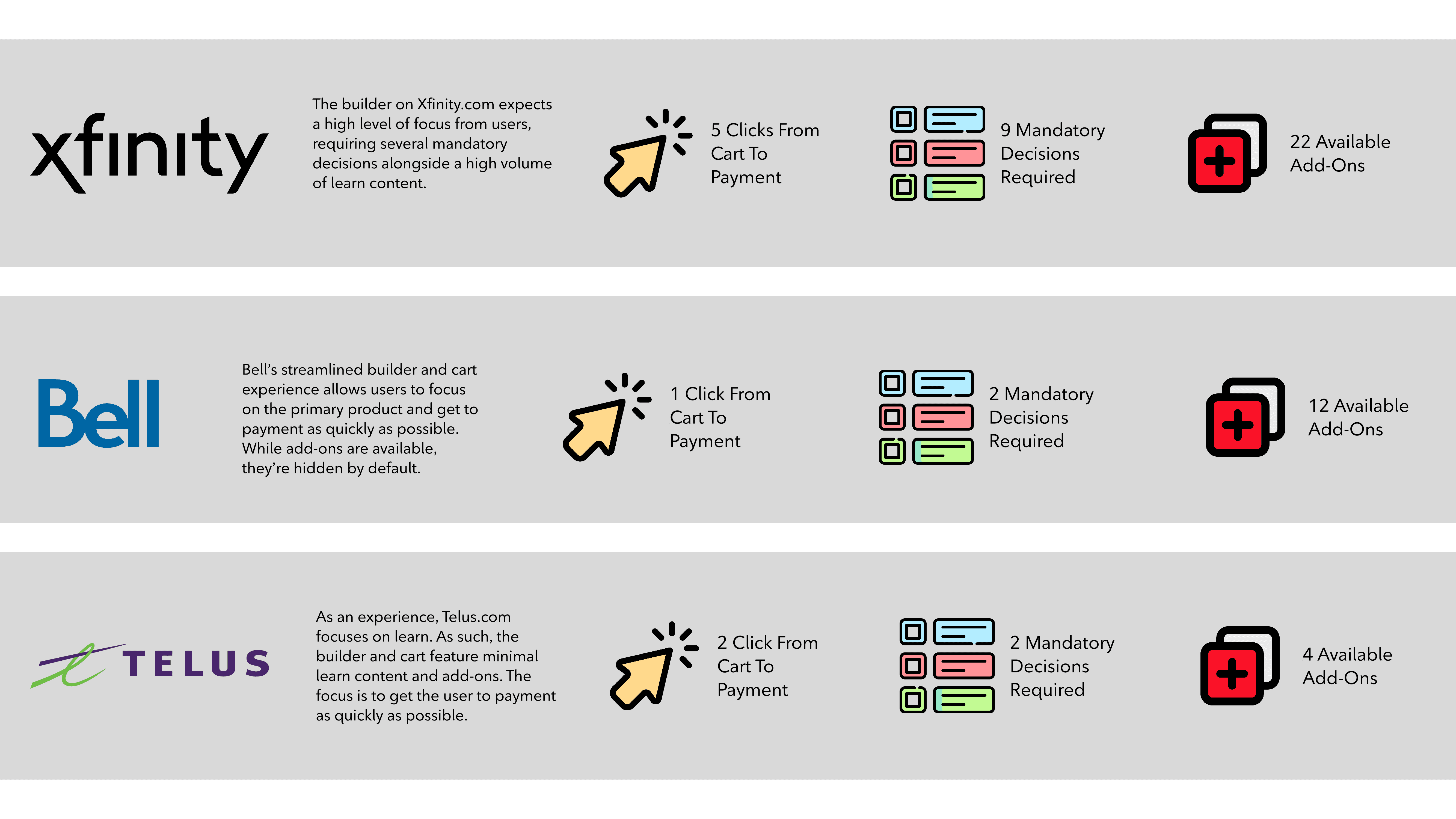
Rogers.com would be late to the bundle builder party. All the other major Canadian telecoms offered some level of bundle customization. As such, an in-depth competitive analysis and audit provided insights into the strengths and weaknesses of each experience. Beyond those learnings, the gap in experience between Rogers and its main competitors could convince the more tentative stakeholders the benefit and need for a bundle builder.
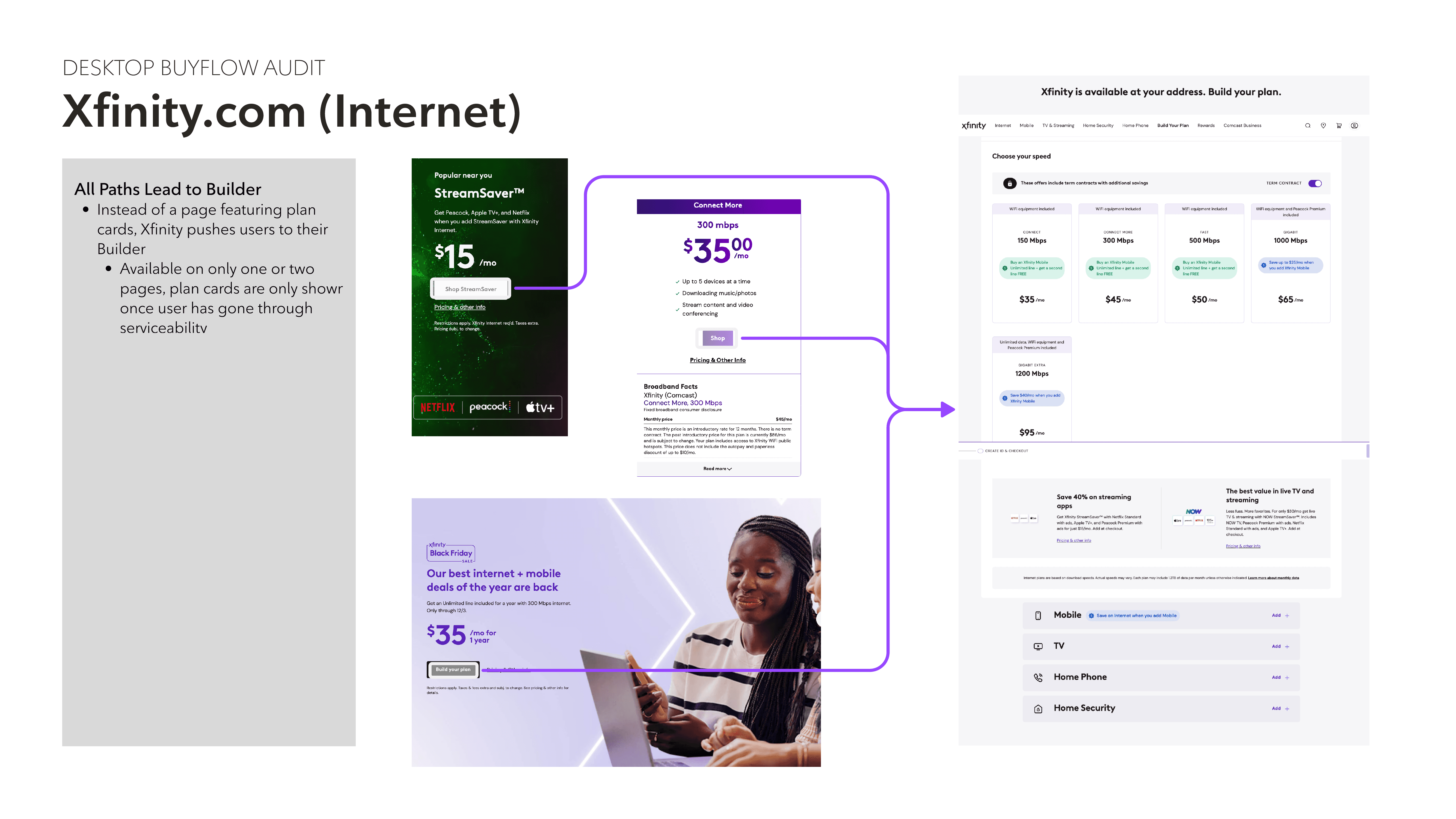
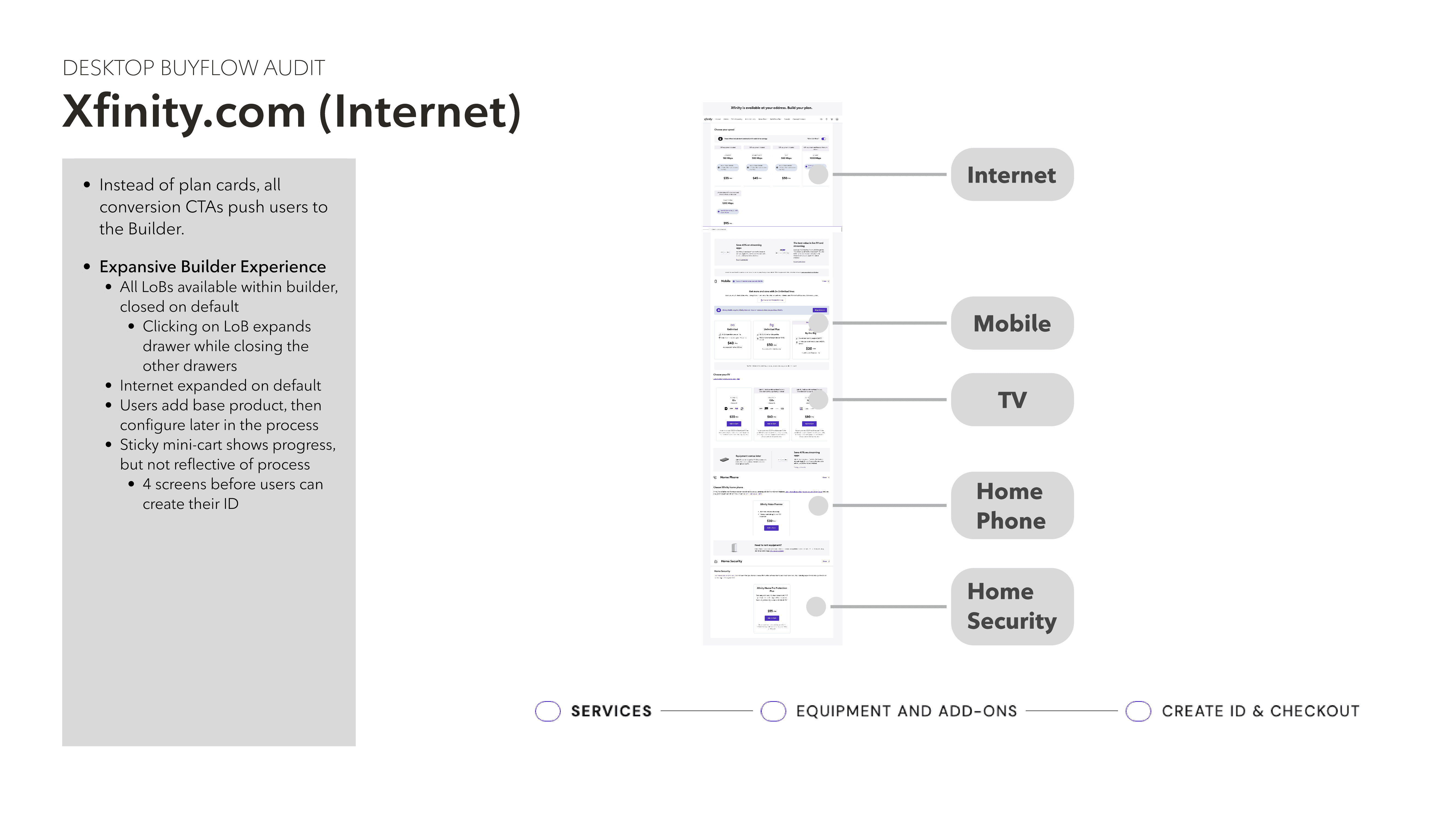
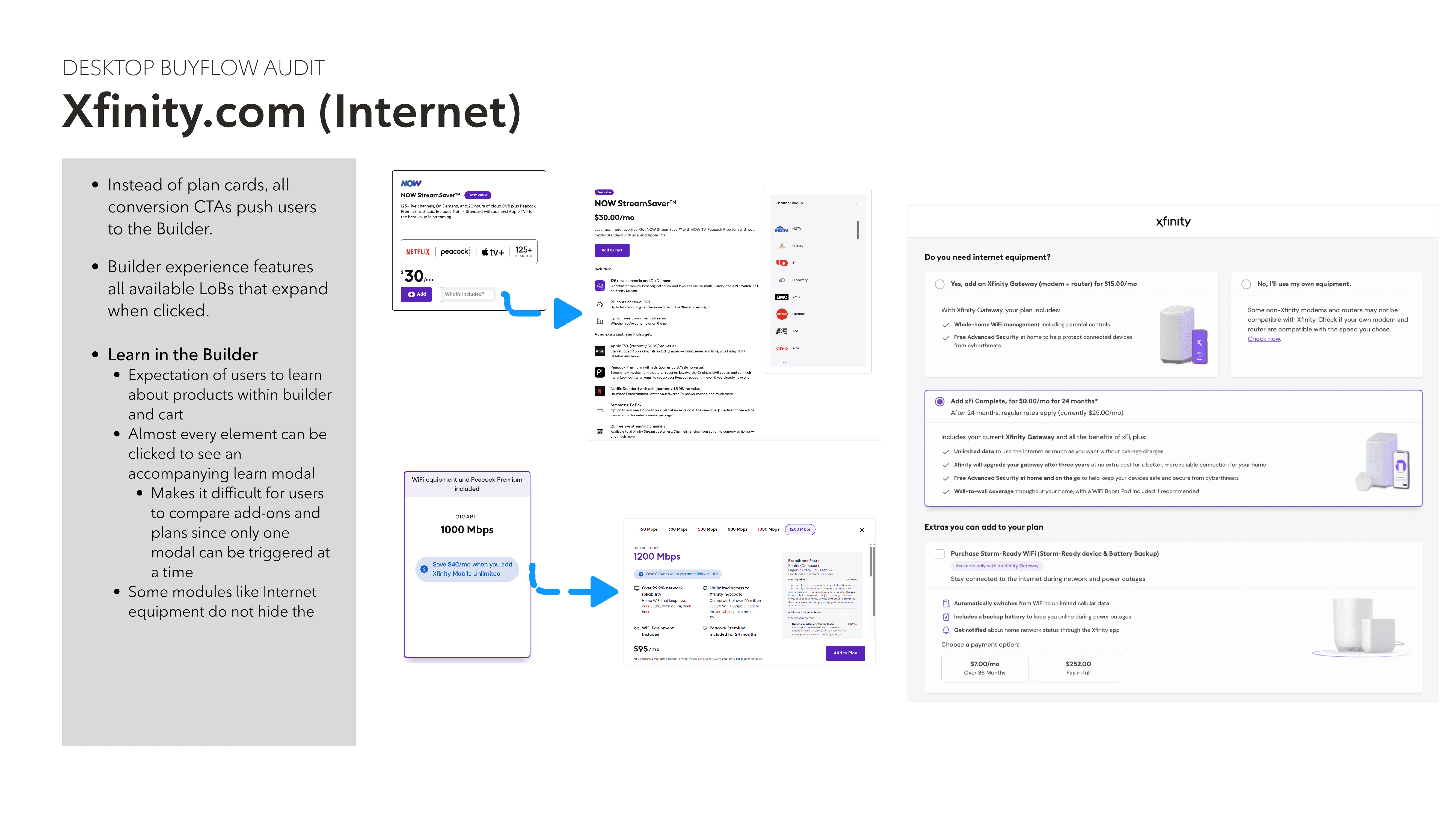
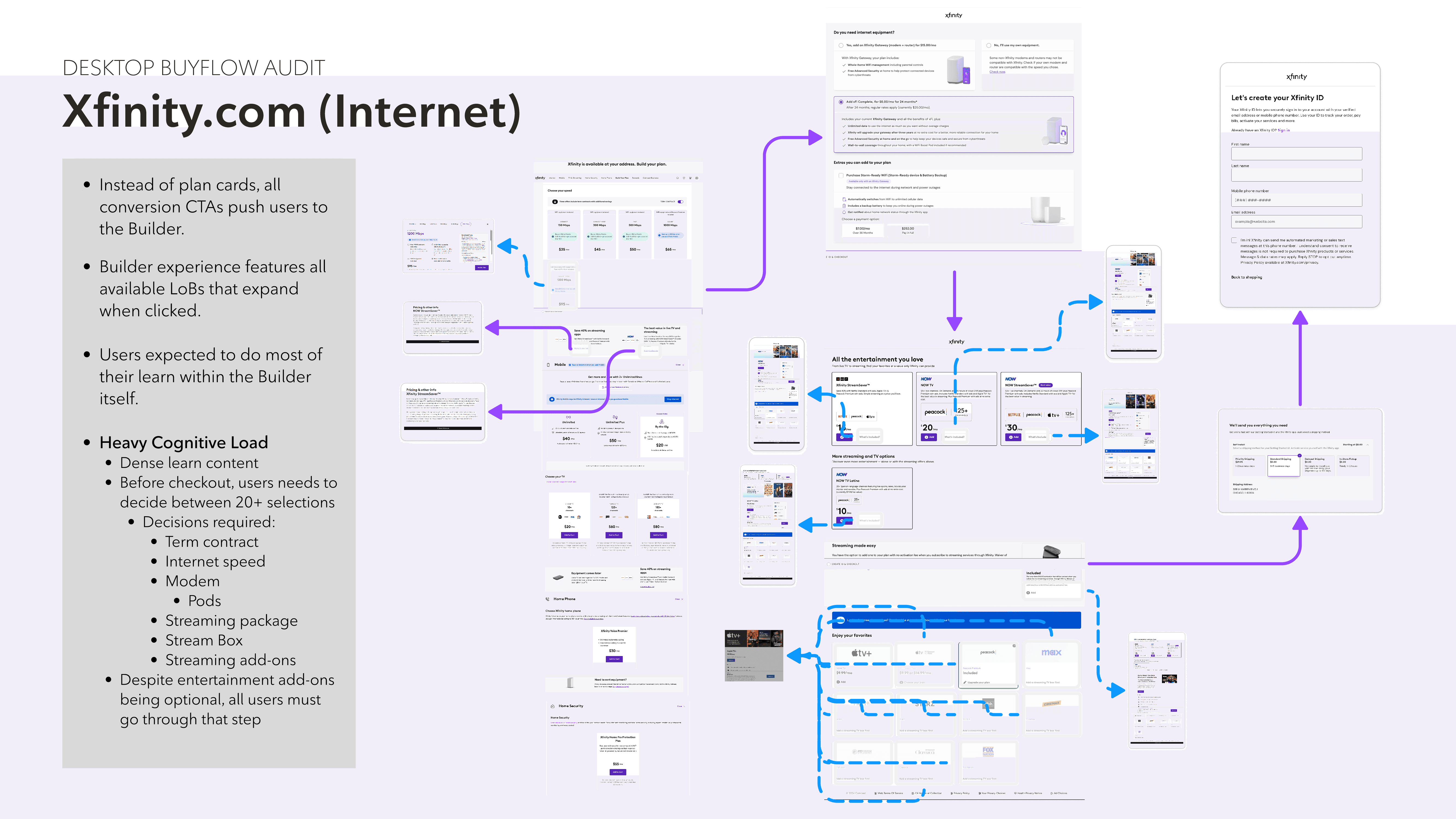
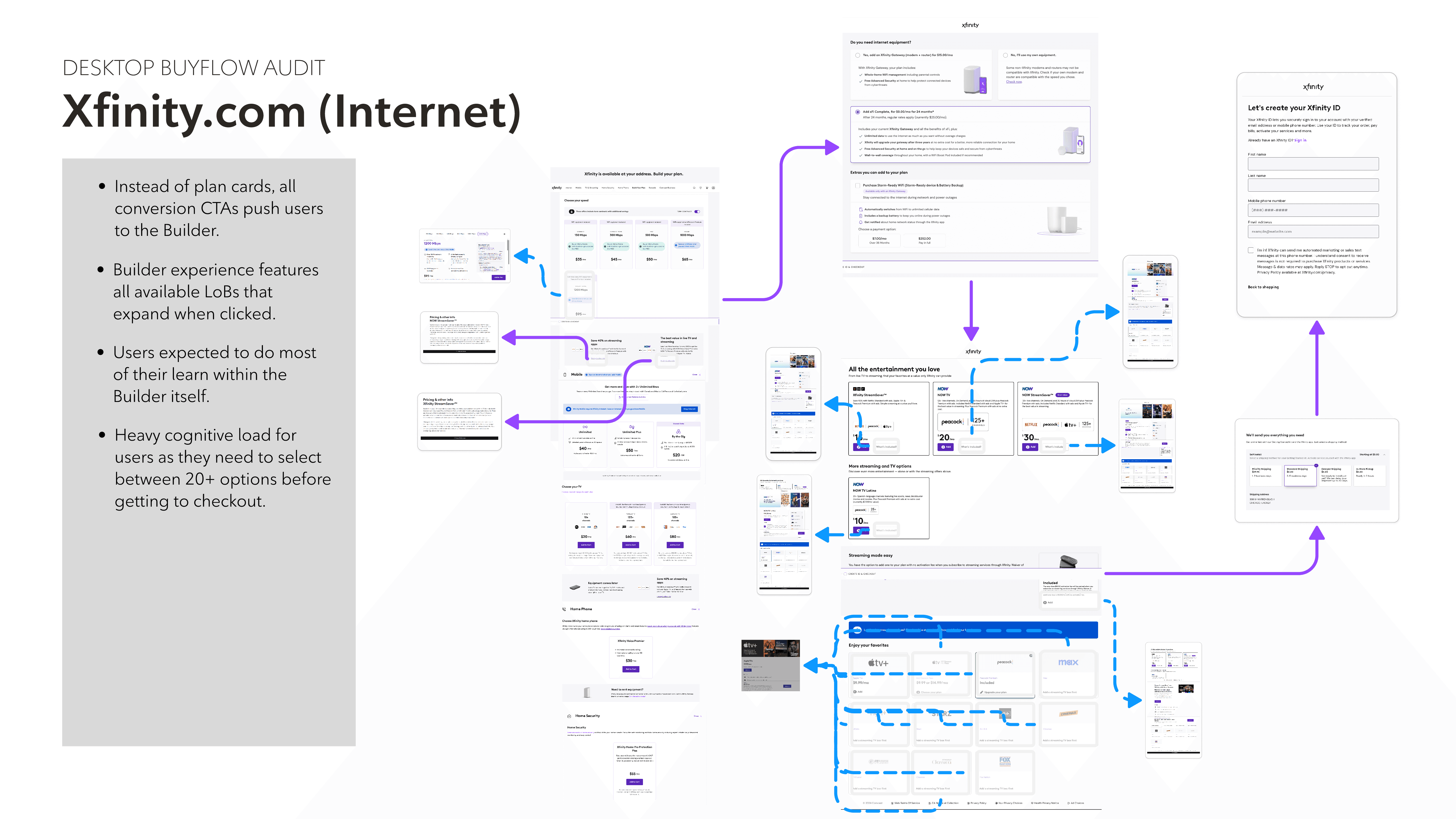
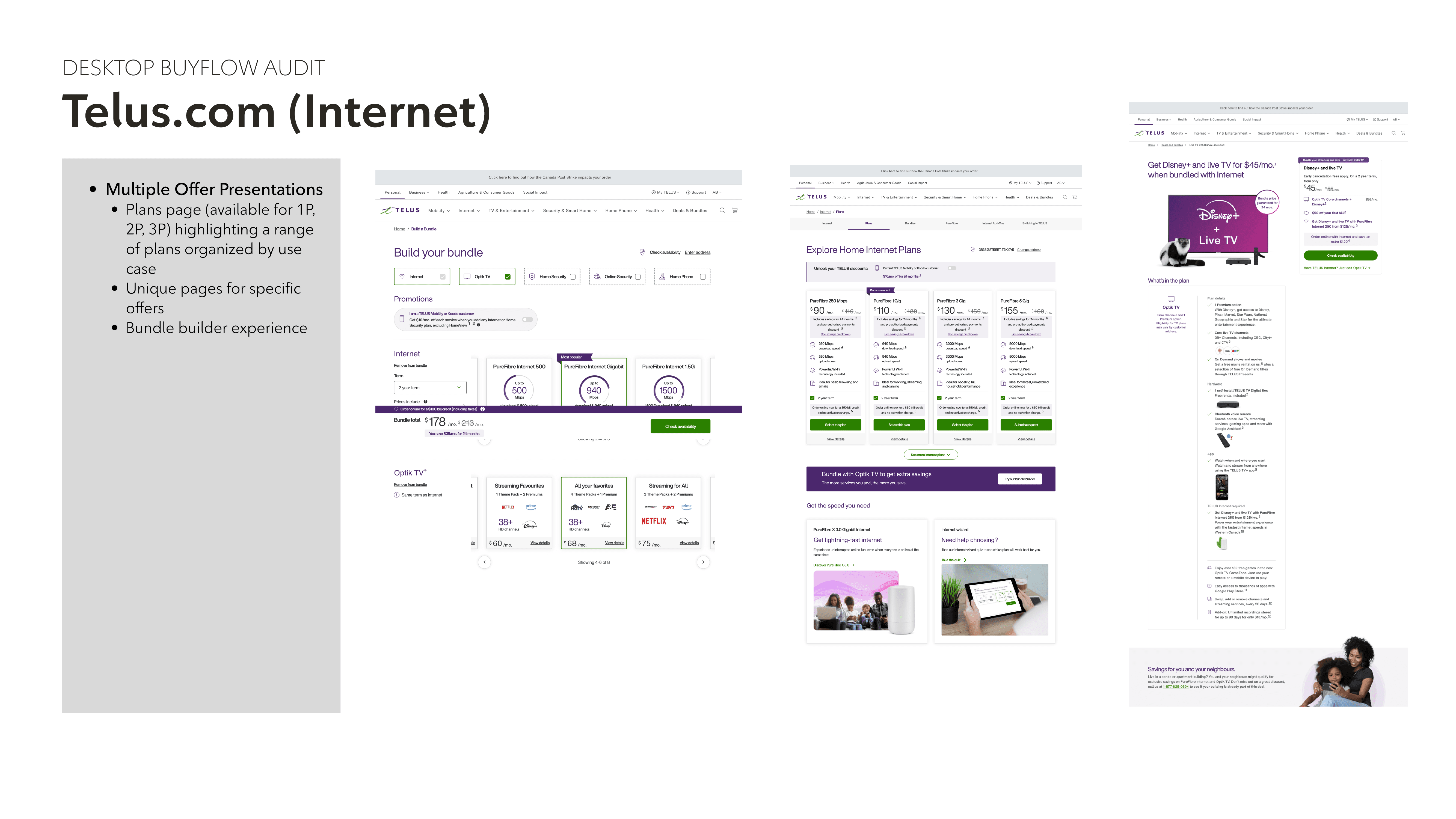
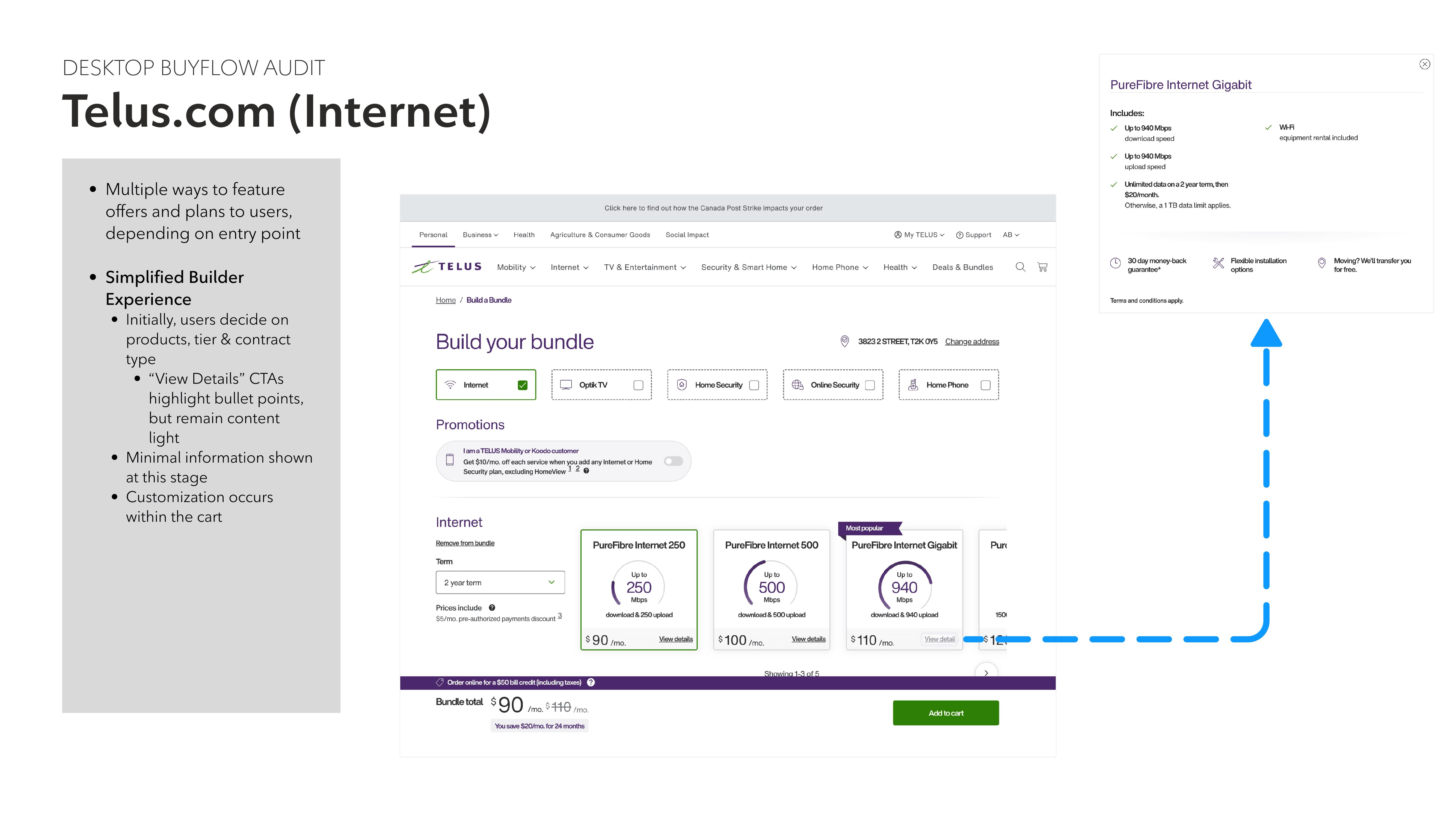
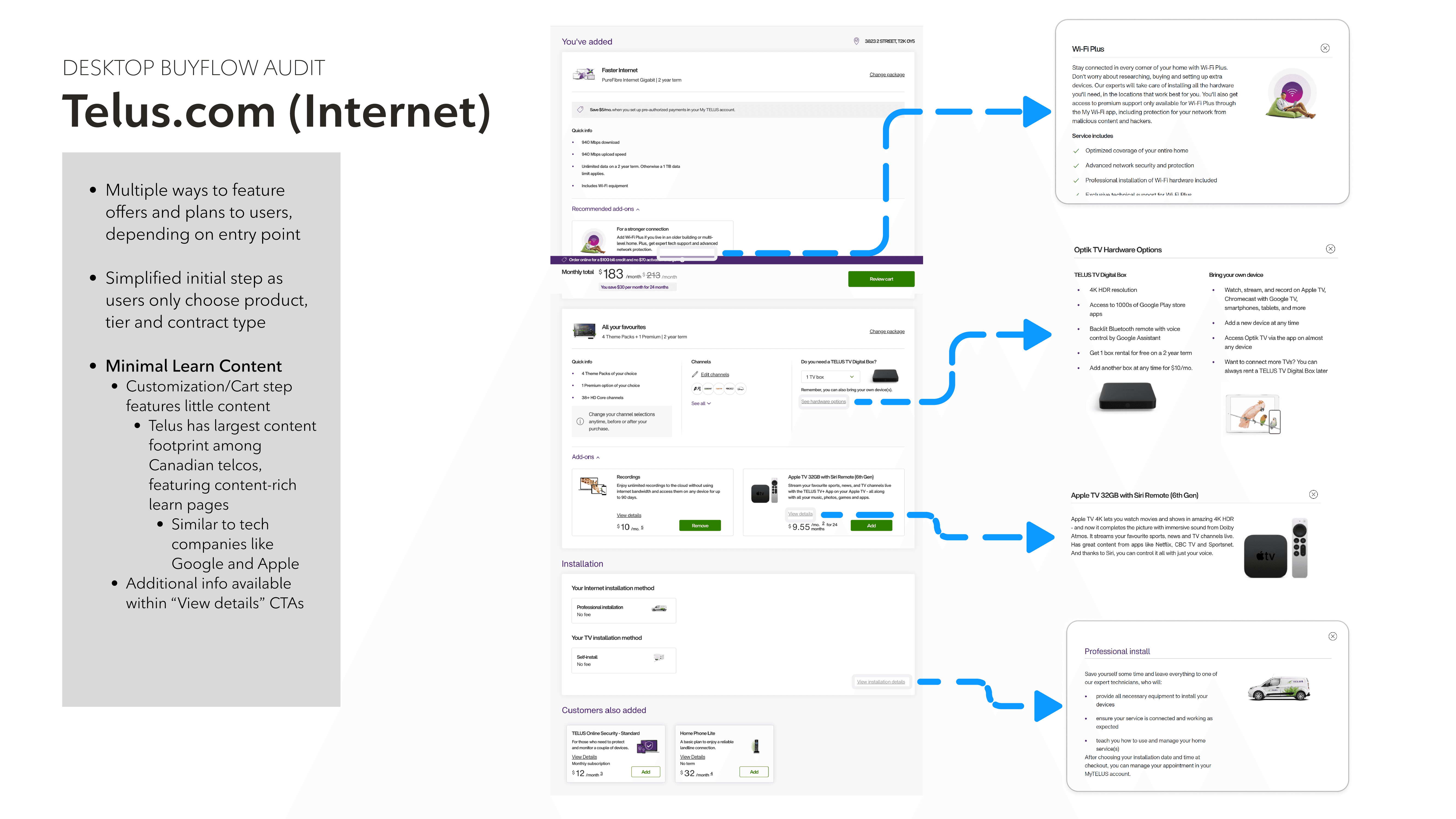
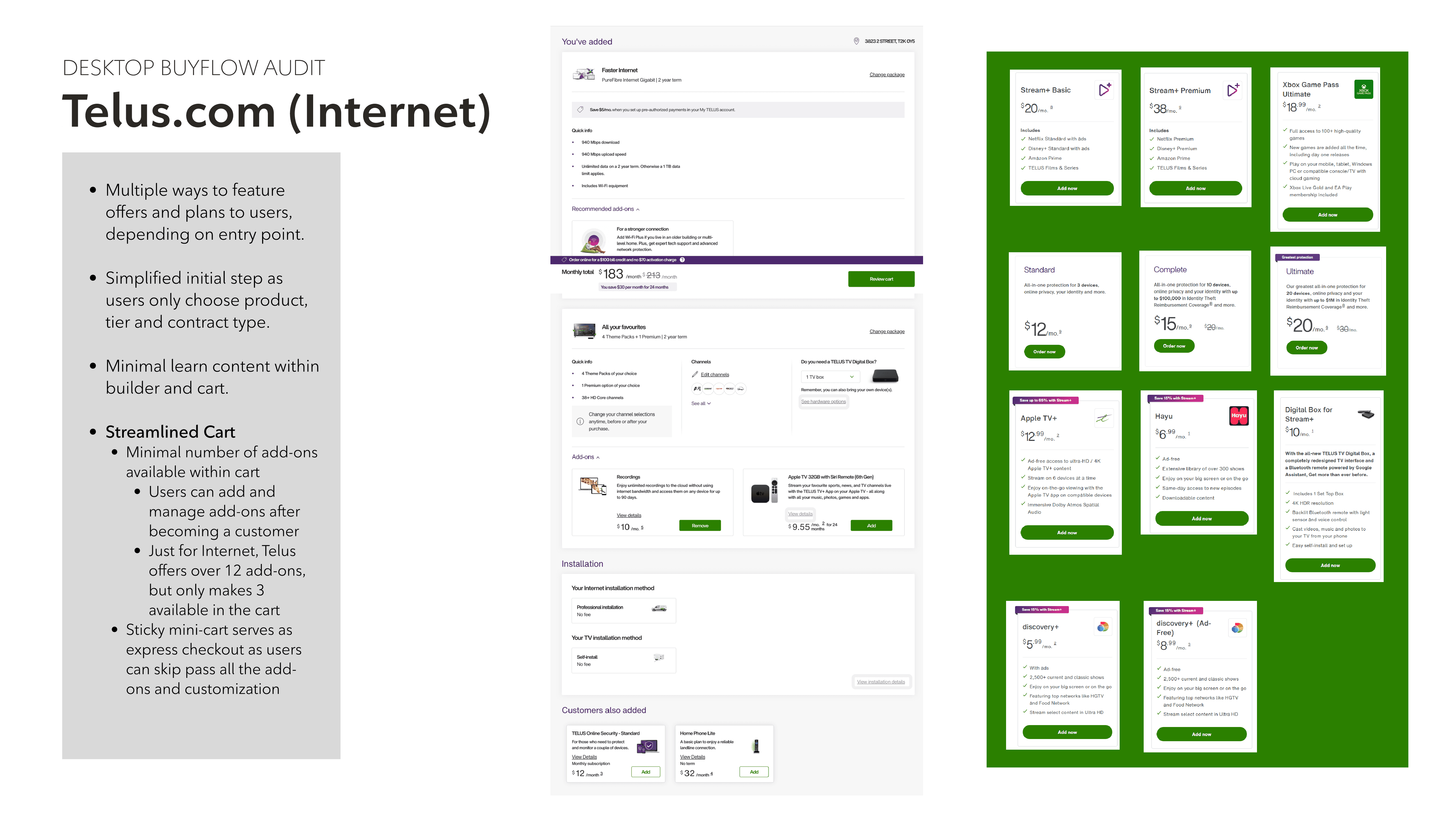
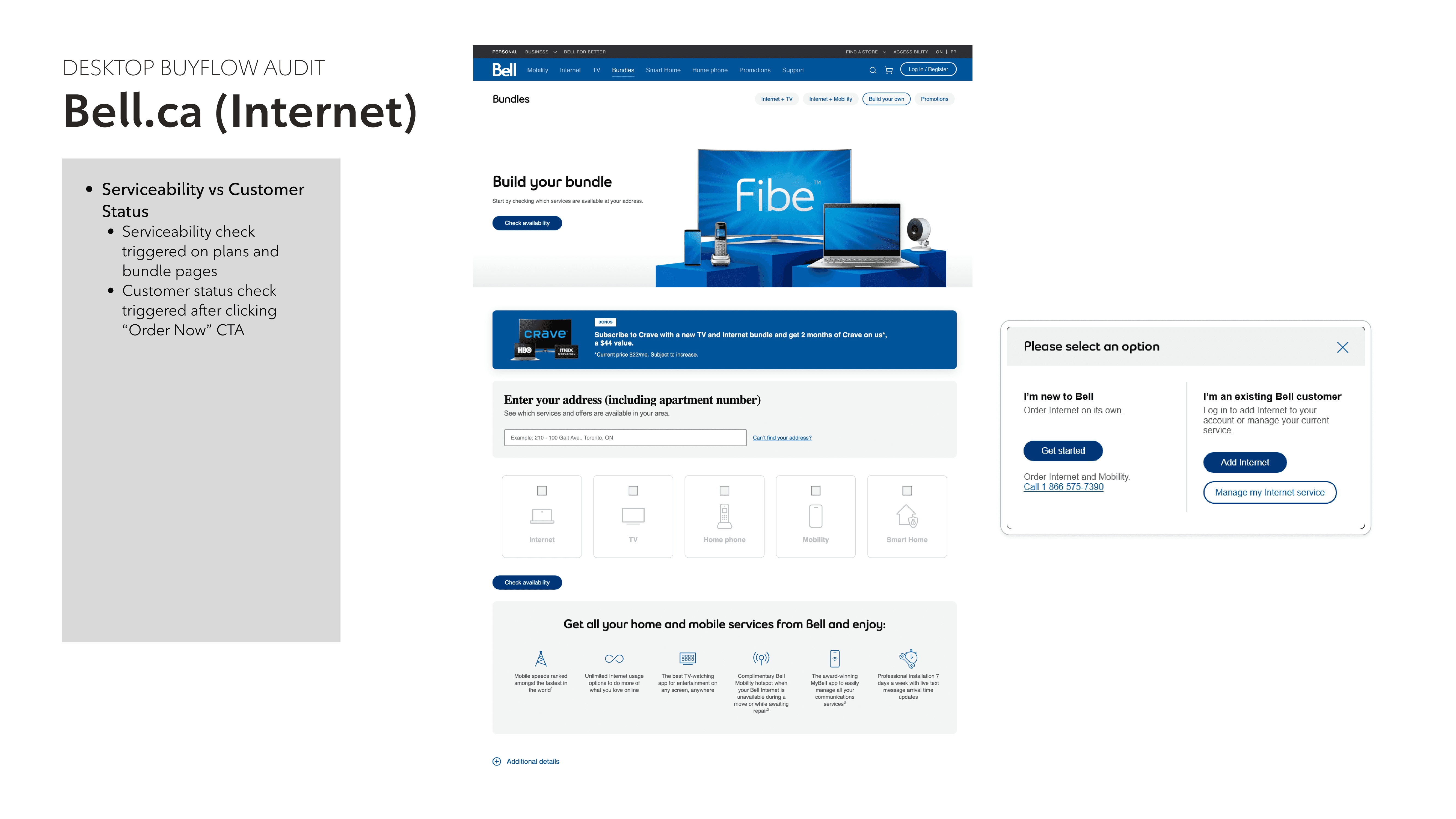
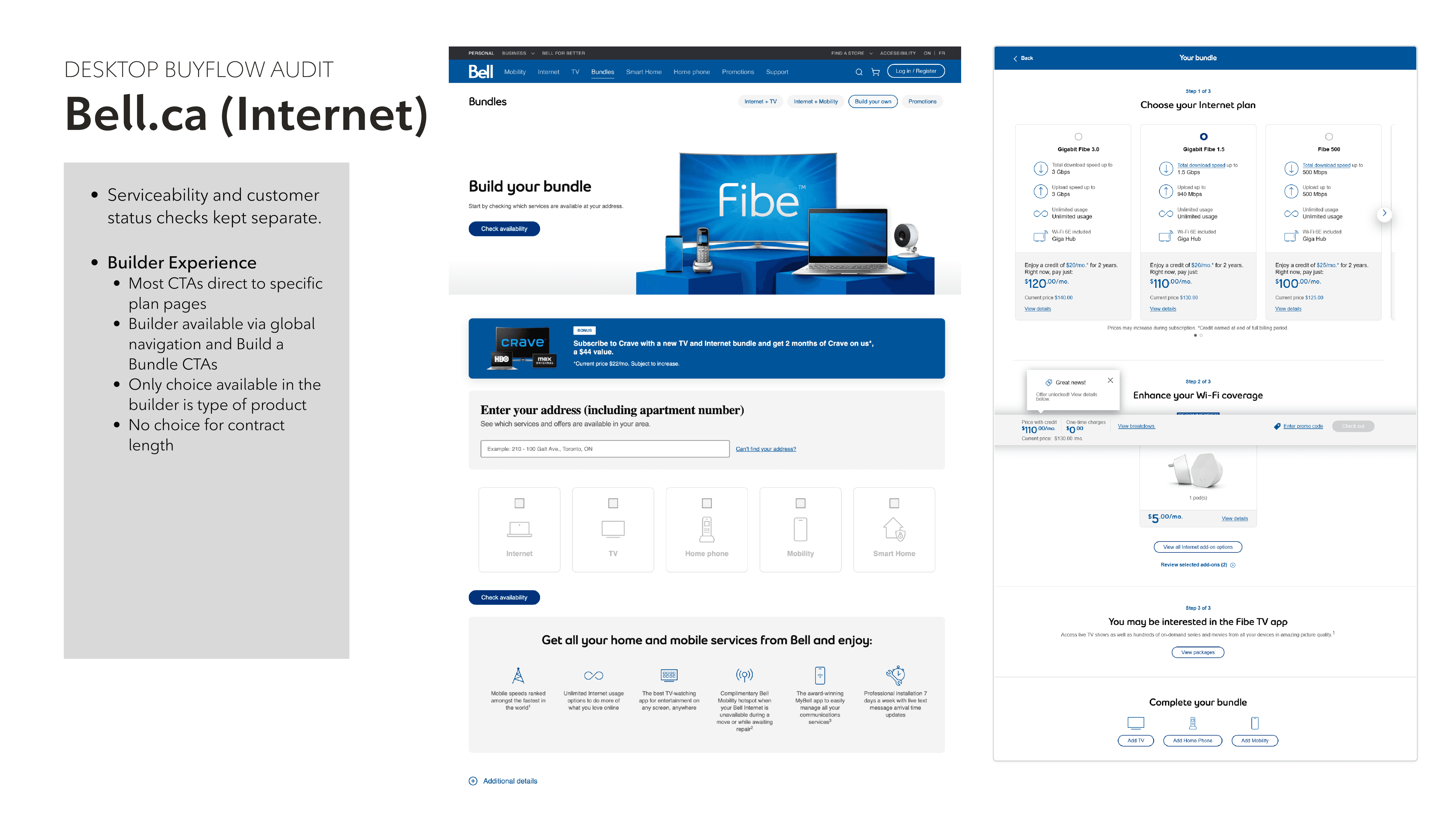
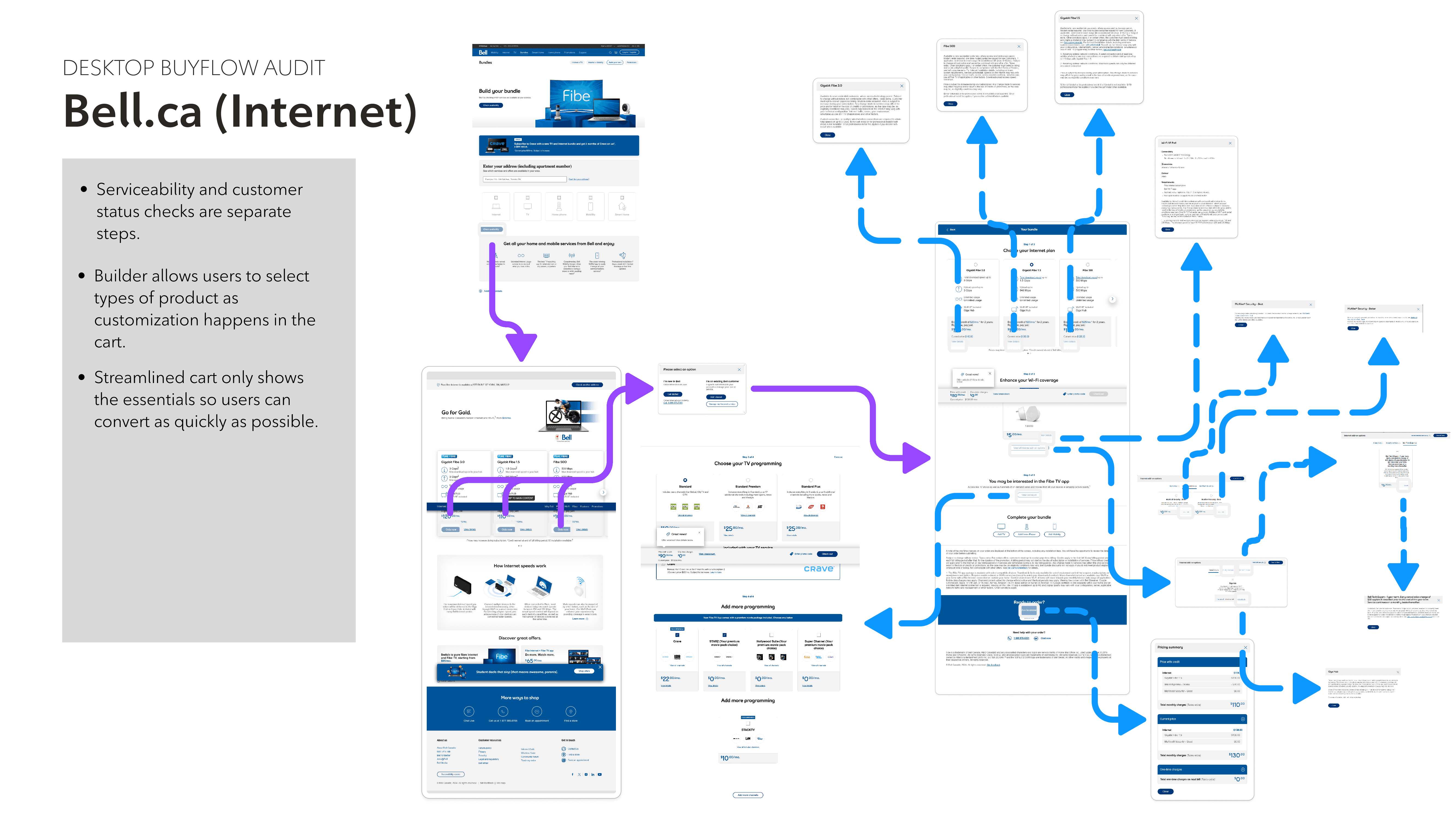
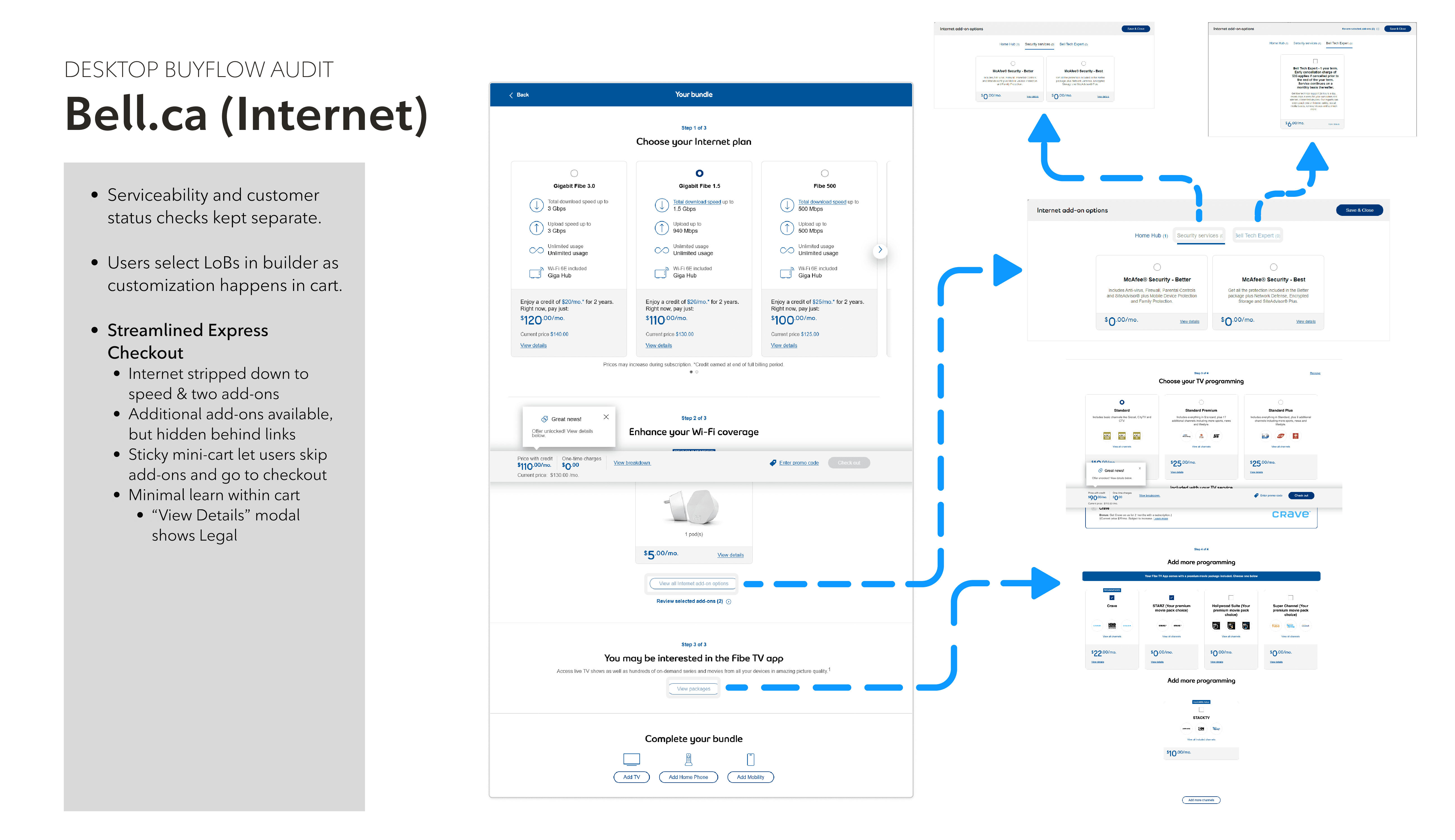
I audited the end-to-end purchase flows of Bell, Telus and Xfinity (Rogers licenses Xfinity technology for Internet, TV, Streaming and Home Security services). Documentations for the specific audits are available in the Appendix.
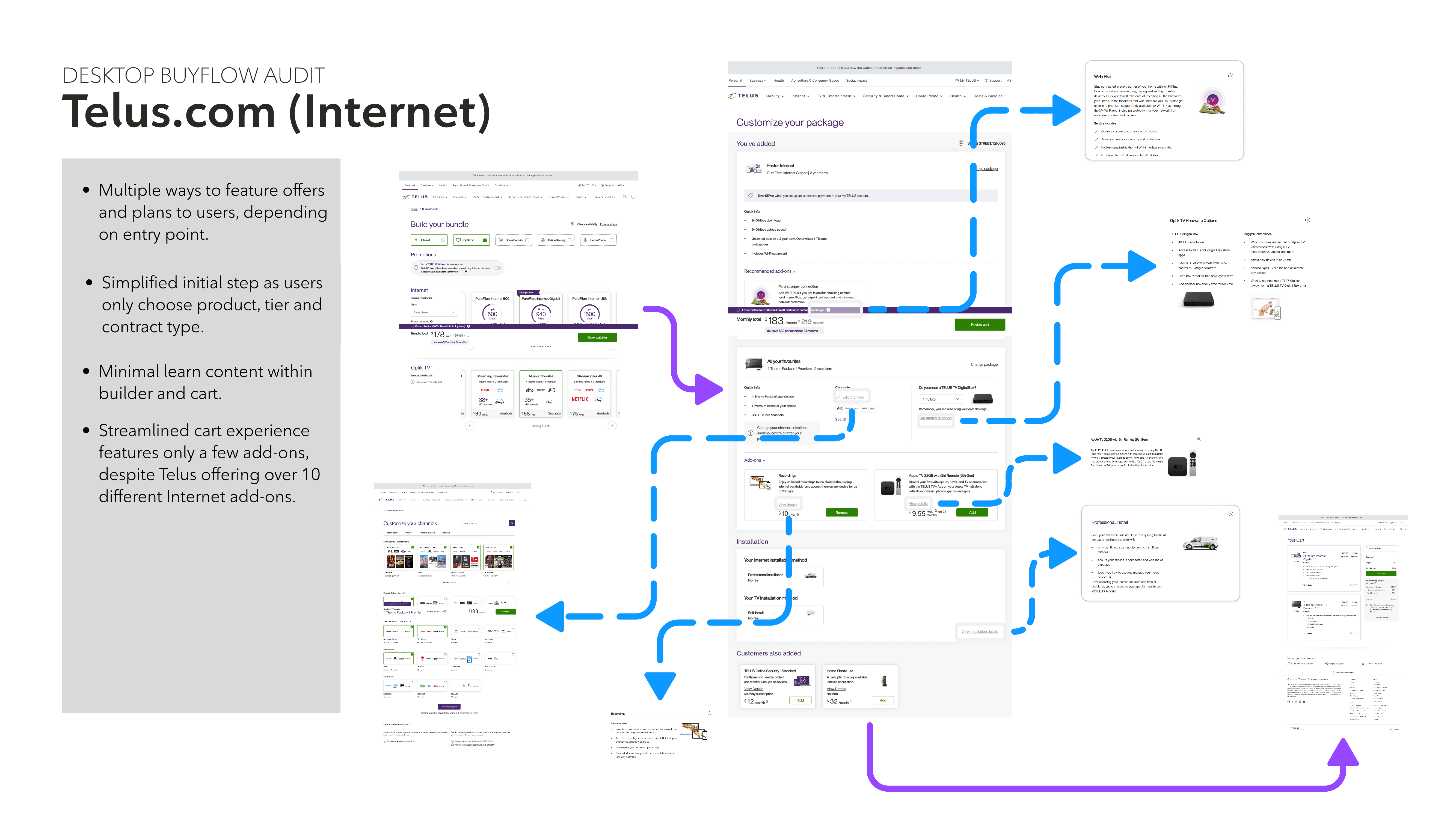
Here are few high-level insights and learnings:
Internal Audits & Complexity Mapping
Building on previous audits conducted in the past, I focused on auditing the Self Protect purchase flow. Self Protect is Rogers’ primary home security product and also happens to be the most complex product available on Rogers.com. When selecting Self Protect, users need to select an included device before they can continue to the checkout, but they can also add any number of additional devices to their plan.
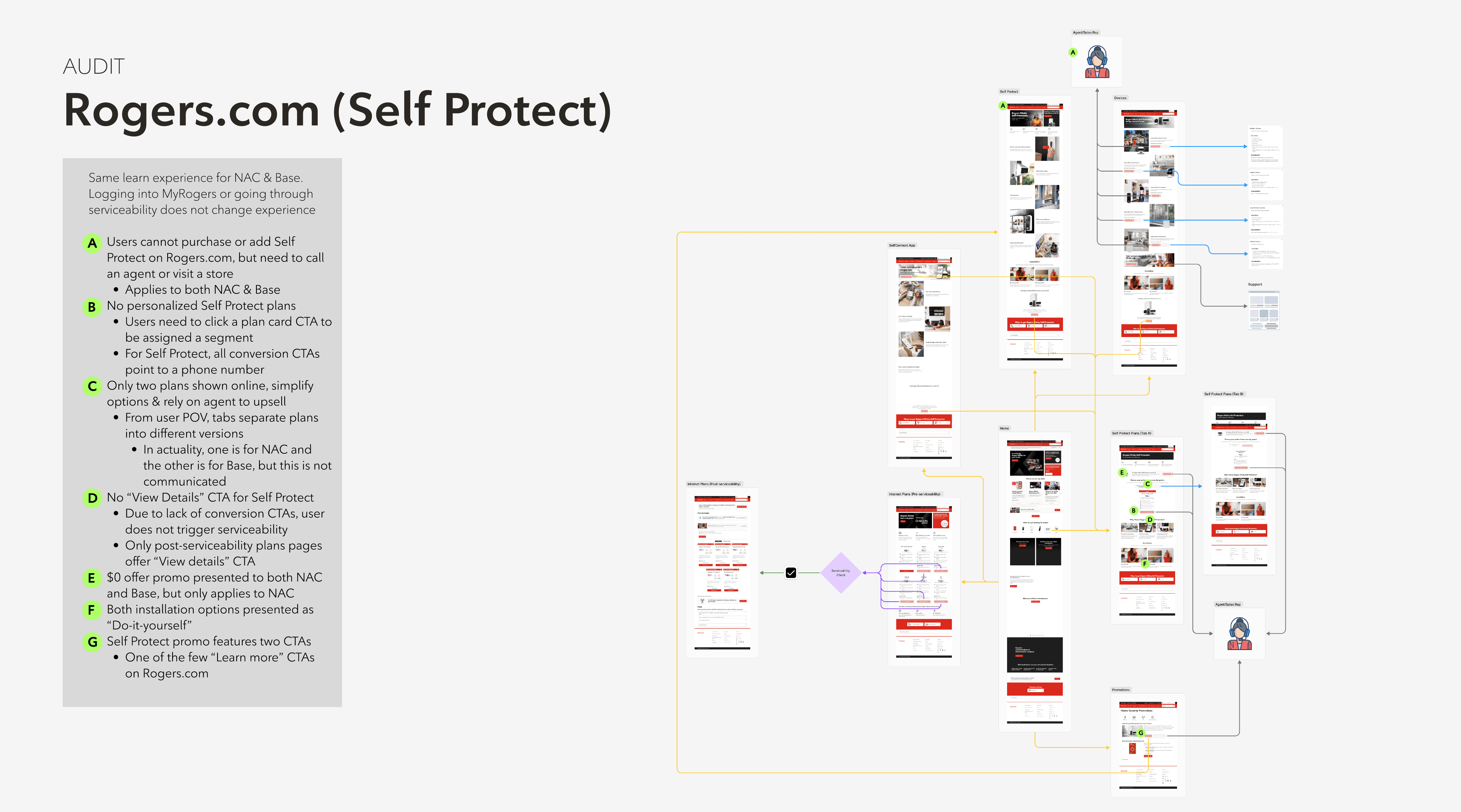
Mapping the Self Protect purchase flow helped identify the following opportunities:
Reducing decision points
Consolidating elements and content
Understanding the compatibility logic
Generative AI Prototyping
The bundle builder project marked the first integration of Generative AI into the UX Design process. As the UX Strategist, I used Figma Make to generate low-fidelity prototypes to test the architecture and logic of the builder.
Generative AI tools like Figma Make are only as good as the data you input. The in-depth research and audits informed the over 300 targeted prompts used to generate the prototype. The specificity of the prompts ensured that the prototype could simulate the backend technical restraints and product compatibilities of Rogers.com. The prototype provided a tangible artifact that stakeholders could interact with and provide a better understanding how the bundle builder would operate in real-world conditions.
With Figma Make, I could quickly iterate on the prototype to reflect stakeholder feedback. A process that once took weeks could be done in days, and helped stakeholders focus on how the experience worked rather than what it looked like.
Appendix
01
02
03
04
05
06
07
08
09
010
011
012
013
014
see also